
TL;DR
Open a free Amazon Business account
Business pricing, bulk buying and tax-exempt orders.
Create a free accountAs an affiliate, we earn on qualifying purchases.
Start small with essential items like a knife, flashlight, and first aid supplies. Prioritize quality and regular updates. Your EDC kit should be simple, reliable, and tailored to your daily needs.
Start with essentials: knife, flashlight, first aid, and a pen.
Prioritize quality over quantity—reliable gear lasts longer and performs better.
Regularly review and replace worn or expired items.
Keep your kit legal and discreet to avoid trouble.
Choose eco-friendly options to make your gear sustainable.
Define Your Needs Before Building Your EDC Kit
The first step in building a practical EDC kit is understanding what you’ll actually need. Are you outdoors often? Do you work in an urban environment? Your daily routines shape your gear choices. For example, a nurse might prioritize a small first aid kit, while a hiker needs a multi-tool and extra batteries.
Think about common scenarios you face. Do you commute? Do you carry a bag or keep items in your pocket? Tailor your kit so it’s easy to access and not a burden. Recognizing your specific needs helps prevent overloading your kit with unnecessary items, which can lead to complacency or neglect of essential gear. Conversely, neglecting to include critical tools for your environment can leave you unprepared when it counts. The goal is to find a balance that aligns with your daily risks and routine.

Gerber Gear Paraframe Mini Pocket Knife, 2.2" Fine Edge Small EDC Folding Knife with Safety Lock for Everyday Carry, Gifts for Men, Stainless Steel
- Blade Material: Stainless steel with clip point design
- Blade Length: 2.2 inches
- Locking Mechanism: Frame lock handle
As an affiliate, we earn on qualifying purchases.
As an affiliate, we earn on qualifying purchases.
Choose Compact, Reliable Gear That Fits Your Lifestyle
Practical EDC gear must be durable and portable. For example, a 2.5-inch stainless steel pocket knife from a trusted brand can handle daily tasks without weighing you down. Pair it with a small, high-lumen flashlight—something about the size of your thumb that can cut through darkness. The choice of materials and size directly impacts functionality and comfort. High-quality stainless steel blades resist corrosion and maintain sharpness longer, meaning less frequent replacements. A compact flashlight enhances safety during low-light situations, but choosing one with a high lumen output ensures it’s effective in emergencies.
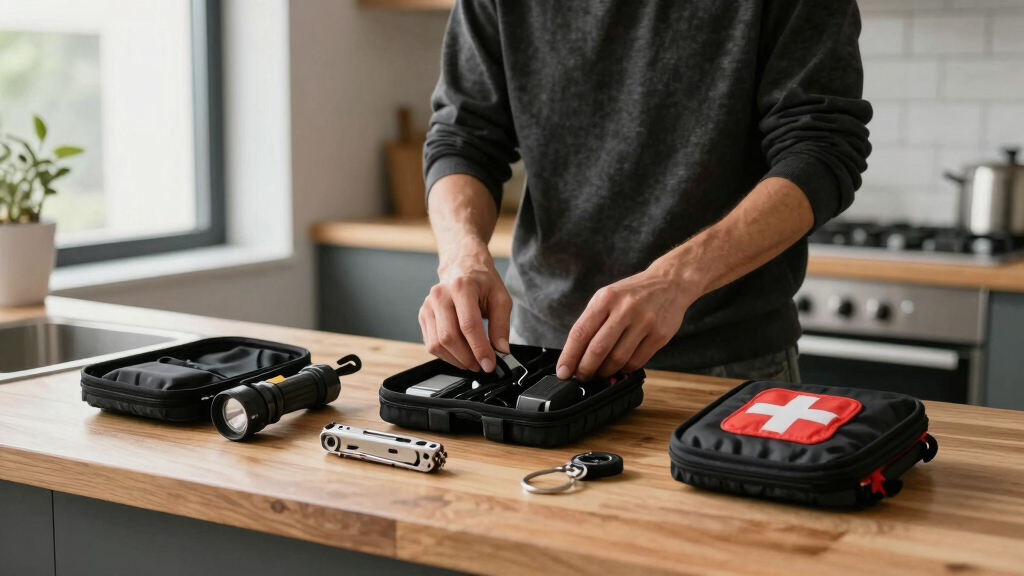
Use sturdy containers like a slim pouch or a minimalist organizer. This keeps everything in place and prevents rattling or loss. Remember, less is more: carry just enough to handle common issues. Overloading your kit can cause fatigue or discourage use, while underpacking risks missing critical tools. The tradeoff lies in balancing preparedness with convenience—selecting gear that’s robust enough to handle tough conditions but lightweight enough to carry effortlessly every day.

ACEBEAM TAC 2AA EDC Tactical Dual Modes Flashlight, 1400 High Lumens Light
- Dual Modes and Switches: EDC and Tactical modes with dual switches
- High Brightness: 1400 lumens with long-range beam
- Durable Construction: IP68 rated, impact and water resistant
As an affiliate, we earn on qualifying purchases.
As an affiliate, we earn on qualifying purchases.
Build Your Essential Gear List in 5 Simple Steps
- Identify core tools: Knife, flashlight, multi-tool. Consider how each item enhances your ability to respond quickly to common issues and why each is vital. For instance, a knife can serve multiple functions—cutting, opening packages, or even self-defense—making it a versatile staple.
- Add safety essentials: First aid kit, whistle, personal alarm. These items are crucial for addressing injuries or alerting others in emergencies. Understanding their importance helps you prioritize quality and accessibility—cheap, bulky options may fail when needed most.
- Include everyday items: Pen, notepad, keys, wallet. These are not just convenience items but also tools for communication and documentation during critical moments. For example, a pen allows you to record important information or leave notes, which can be invaluable in certain situations.
- Pick tech accessories: Portable charger, cable. With our reliance on smartphones, ensuring you can recharge on the go is essential. This prevents situations where your device becomes useless during emergencies, potentially leaving you disconnected when you need help.
- Review and refine: Remove non-essentials, test in real-world scenarios. Regular testing reveals gaps or redundancies, helping you optimize your kit for actual use rather than theoretical preparedness. This iterative process ensures your gear remains relevant and effective as your circumstances evolve.

Mini First Aid Kit – 150 Piece Small Waterproof Hard Shell Medical Kit for Home, Car, Travel, Camping, Truck, Hiking, Sports, Office, Vehicle & Outdoor Emergencies- Small First Aid Medical Kit (Red)
- Complete Emergency Supplies: Over 150 professional-grade medical items
- Lightweight & Compact: 6.4 x 4.9 x 2.7 inches, 0.73 lbs
- Travel-Friendly Design: Includes zippers and carabiners for portability
As an affiliate, we earn on qualifying purchases.
As an affiliate, we earn on qualifying purchases.
Compare Popular EDC Tools to Pick Your Best Options
| Feature | Leatherman Wave | Gerber Center-Drive | Victorinox Swiss Army Knife |
|---|---|---|---|
| Blade Length | 3.3 inches | 3.25 inches | 2.5 inches |
| Weight | 8.5 oz | 9.2 oz | 3.2 oz |
| Tools Included | 20+ | 15+ | Multiple blades and tools |
| Durability | High-grade stainless steel |
When comparing these tools, consider how each feature aligns with your needs. For example, a longer blade or more tools can increase versatility but might add weight. Durability ensures the tool can withstand daily wear and tear, crucial for reliability in emergencies. The tradeoff often involves balancing multi-functionality with portability. A multi-tool with more features may be heavier and bulkier, which could impact comfort during extended carry. Conversely, a minimalist design might lack some functions you find essential. Your choice should reflect a clear understanding of what tasks you anticipate and the environments you’ll be in.

MAXPEDITION Platy Pocket Organizer, Durable EDC Tool Pouch for Men, Neck Wallet with Paracord Lanyard, Holds Flashlight, Multitool, Pen, Notebook (Black, 4" x 6")
- Slim and Compact Design: Fits easily in pockets with ample storage
- Durable Water-Resistant Material: Made from 500D coated nylon for protection
- Multiple Carry Options: Includes removable paracord lanyard and webbing loop
As an affiliate, we earn on qualifying purchases.
As an affiliate, we earn on qualifying purchases.
Maintain and Update Your EDC Kit Regularly
An EDC kit isn’t a ‘set it and forget it’ deal. Items wear out, batteries die, and your needs change. Every 6-12 months, do a quick review. Replace expired bandages, recharge batteries, and swap out worn tools. This process isn’t just about keeping the gear functional; it’s about ensuring your preparedness remains relevant to your current lifestyle and environment. For example, if you move to a colder climate, you might need warmer gloves or different first aid supplies. Regular maintenance helps you identify potential failures before they occur, reducing the risk of being caught unprepared during an emergency. It also encourages mindfulness about your gear, making sure it’s always ready to perform when needed.
Stay Within Legal Limits and Carry Confidently
Carrying certain items like knives or pepper spray can be restricted by law. Know the rules in your area. For example, some cities ban blades over 3 inches or require special permits. Ignorance of these laws can lead to confiscation, fines, or even criminal charges, which defeats the purpose of being prepared. Understanding local regulations helps you select legal alternatives or adjust your gear accordingly. Always carry your gear discreetly. A small, well-organized pouch can hide your tools while keeping them accessible. This not only prevents alarming others but also ensures quick access when needed. Respectful and lawful carrying practices safeguard your ability to stay prepared without risking legal trouble, allowing you to focus on what truly matters—your safety and peace of mind.
Make Your EDC Gear Eco-Friendly and Sustainable
Use rechargeable batteries for flashlights and power banks. Opt for durable, reusable containers instead of disposable plastic. For example, swap single-use wipes for a small refillable hand sanitizer bottle and use metal utensils over disposables. These choices reduce waste and environmental impact, aligning your preparedness with sustainability. Additionally, investing in high-quality, long-lasting gear means fewer replacements over time, which also minimizes waste. For instance, a sturdy, reusable water bottle not only reduces plastic waste but also ensures you have access to clean water in emergencies. By consciously choosing eco-friendly options, you contribute to a healthier planet while maintaining an effective, reliable kit that won’t need frequent replacements—saving money and reducing your ecological footprint.
Frequently Asked Questions
What are the absolute must-haves for a basic EDC kit?
A pocket knife, a small flashlight, a basic first aid kit, and a pen are the core essentials. These cover most common daily needs and minor emergencies.How do I choose the right size EDC pouch?
Match it to your daily routine. If you carry a bag, get a slim organizer that fits inside. For pocket carry, look for compact, lightweight options that don’t bulk up your jeans or jacket.How often should I check my gear?
Every 6-12 months. Replace batteries, check for wear, and update items based on changing needs or new gear innovations.Are there legal restrictions I should know about?
Yes. Laws vary by location, especially for knives, pepper spray, or self-defense tools. Always research your local regulations before carrying certain items.Can I carry an EDC kit at work?
Depends on your workplace policy. Opt for discreet, non-threatening items and avoid anything that could be mistaken for a weapon. When in doubt, keep your kit in your bag or car.Conclusion
A practical EDC kit isn’t about packing everything — it’s about packing what matters. Focus on reliable, essential tools that fit your lifestyle. Keep it simple, stay prepared, and carry with confidence. The right gear transforms everyday moments into opportunities for quick action and calm control.Summer Picks
summer essentials
As an affiliate, we earn on qualifying purchases.