
TL;DR

Get your wardrobe favorites delivered free with Prime
- Fast, free delivery on millions of items
- Prime Video, Amazon Music and more included
- Member-only deals all year
Lumens measure a flashlight’s total light output. For everyday tasks, 100-300 lumens often suffice, while outdoor, search, or tactical use demands higher brightness. Modern LEDs and batteries make high-lumen, compact flashlights widely available.
Ever wondered what those lumen numbers really mean? You’re not alone. The brightness of a flashlight can seem like a mystery, especially when shopping for your everyday carry or outdoor gear.
Understanding lumens helps you pick the right light—not too dim, not painfully bright. It’s about matching your needs with the right brightness level, so you’re prepared without wasting battery or risking disorientation. Let’s break down what this all means and how you can choose wisely.
Lumens measure total light output; pick based on your activity needs.
For everyday tasks, 100-300 lumens are usually enough; outdoor or professional work often needs 1000+ lumens.
Beam focus and adjustable modes enhance the practical use of brightness, not just raw lumens.
Recent LED tech makes high-brightness, compact flashlights accessible and reliable.
Balance your budget, size, and runtime to find the perfect flashlight for your life.
What Are Lumens? Why Do They Matter in Your Flashlight?
Lumens (lm) are the standard for measuring how much visible light a flashlight emits. They tell you how bright the beam will be, not how much power it consumes.
Choosing the right lumen level is crucial because it directly impacts your visibility and safety. Too few lumens and you might struggle to see your surroundings clearly, which can be dangerous in outdoor or emergency situations. Too many, and you risk overwhelming your eyes or blinding others, especially in confined spaces. The tradeoff is battery life: higher lumens often mean shorter operational time. Understanding this helps you balance visibility needs with battery conservation, ensuring your flashlight is effective and reliable when it matters most.
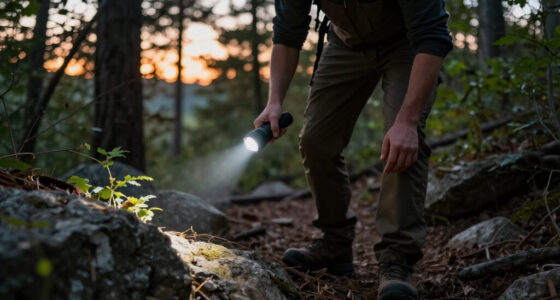
high lumen LED flashlight for outdoor activities
As an affiliate, we earn on qualifying purchases.
As an affiliate, we earn on qualifying purchases.
How Bright Is Too Bright? Finding Your Sweet Spot
Every activity demands a different brightness level, and choosing the right one can greatly affect your experience and safety. For example, a flashlight that’s too bright for indoor use can cause glare or disturb others, while insufficient brightness outdoors may leave you in the dark. The key is understanding the implications: over-brightness wastes battery and can cause discomfort, whereas under-brightness may lead to missed details or hazards. The recommended lumen ranges are guides, but personal preference and specific circumstances matter. For instance, in a rescue situation, the need for maximum visibility may justify higher lumens despite faster battery drain. The tradeoff involves balancing immediate needs against long-term usability, ensuring your light is neither a burden nor a hazard.
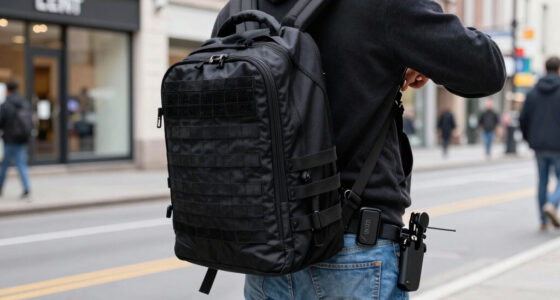
compact tactical flashlight with adjustable modes
As an affiliate, we earn on qualifying purchases.
As an affiliate, we earn on qualifying purchases.
How Beam Distance and Focus Make Lumens More Useful
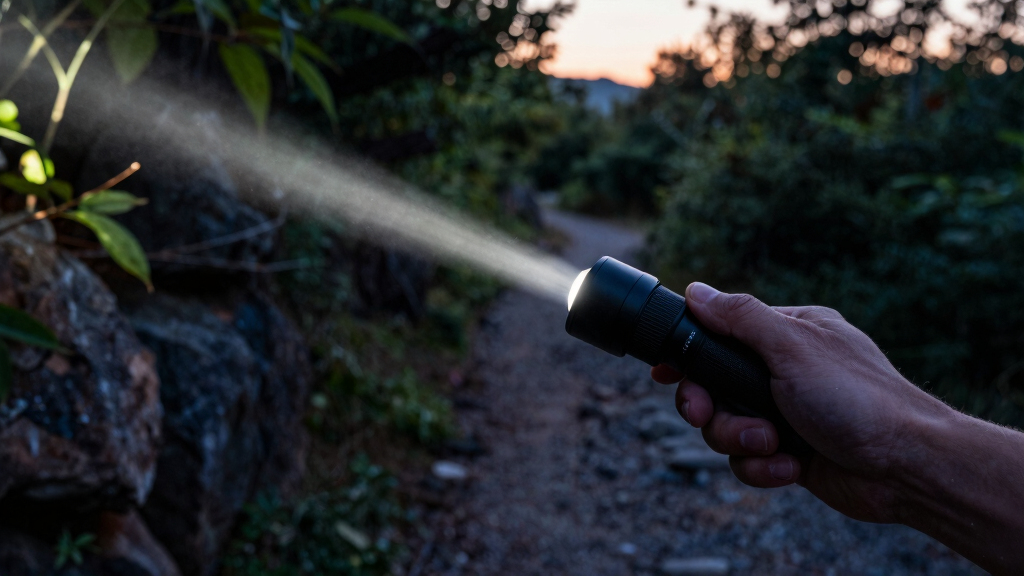
Brightness isn’t just about lumens; how the light is focused plays a critical role in how effective it is. A highly focused beam concentrates light into a narrow, intense point, allowing it to reach farther distances with fewer lumens. Conversely, a wide flood beam covers a larger area but with less intensity at a distance. This tradeoff impacts how you choose your flashlight: if you need to see far away, a focused beam with fewer lumens can be more efficient, saving battery while providing clear visibility. For close-up work or broad illumination, a wide beam with more lumens spreads light over a larger area, but may not reach as far. Recognizing these differences helps you select a flashlight that matches your specific needs, optimizing performance and battery life.
best everyday carry flashlight 300 lumens
As an affiliate, we earn on qualifying purchases.
As an affiliate, we earn on qualifying purchases.
What’s the Deal with Battery Life and Brightness?
Higher lumens typically mean shorter run times because more power is drawn from the battery to produce intense light. For example, a 2000-lumen flashlight might only last an hour on its highest setting, which can be limiting in prolonged situations. Conversely, using lower lumens extends battery life significantly, sometimes by a factor of ten or more, but at the expense of brightness. This creates a tradeoff: if you need sustained illumination without frequent recharging, lower or adjustable settings become essential. Modern flashlights often incorporate multiple modes, allowing you to dial down brightness for longer use or ramp up when maximum visibility is needed. Understanding this balance is key to ensuring your flashlight performs reliably over time, especially in critical scenarios where power management can make or break your experience.
search and rescue flashlight high brightness
As an affiliate, we earn on qualifying purchases.
As an affiliate, we earn on qualifying purchases.
Recent Tech That’s Changing How Bright Your Flashlight Can Be
LED technology has revolutionized flashlights by offering incredible efficiency and brightness in compact sizes. Today’s LEDs produce more lumens per watt, meaning smaller, lighter flashlights can deliver the same or greater light output as larger, older models. This technological leap allows for high-lumen flashlights that are still portable and easy to carry. Additionally, features like programmable modes, strobe functions, and even smartphone app control give users customized lighting options, enhancing safety and convenience. Battery advancements, especially rechargeable lithium-ion cells, further extend the practicality of high-brightness lights, enabling longer use and faster charging. These innovations mean you can now carry a tiny flashlight that can illuminate a mountain peak or a dark alley, combining power, portability, and smart features—changing the way we think about brightness and usability.
How Do You Know What Brightness Level Fits Your Lifestyle?
Determining the right brightness level depends on understanding your primary activities and environments. For everyday carry, 100-300 lumens provide sufficient illumination for walking, reading, or basic tasks without excessive battery drain. If your hobbies involve outdoor adventures like camping or hiking, 200-1000 lumens may be necessary depending on terrain and distance, but consider the tradeoff with battery life. For professional or tactical use, where maximum visibility is critical, 1000+ lumens ensure you can see far and respond quickly. The key is assessing your typical scenarios: if you often need long runtime, prioritize adjustable modes; if portability is paramount, opt for compact, high-output models. Balancing these factors helps you avoid overspending on unnecessary power or underestimating your needs, ensuring your flashlight is a reliable tool tailored to your lifestyle.
Key Questions About Flashlight Brightness — Answered
Q: What is the ideal lumen level for everyday use? Usually between 100 and 300 lumens. It’s enough to see clearly without overwhelming your senses or draining your battery, making it a practical choice for daily tasks and safety.
Q: How does beam distance relate to lumens? Generally, higher lumens can provide longer beam distances, but the focus of the beam significantly affects this. A focused, narrow beam can reach farther with fewer lumens, while a wide flood beam prioritizes area coverage over distance. Recognizing this helps you choose a flashlight that balances power and application.
Q: Are brighter flashlights always better? Not necessarily. While high lumens are advantageous for long-distance viewing or search-and-rescue, they can be overkill for close-range tasks, leading to wasted power and potential discomfort. The best choice depends on your specific needs and environment.
Q: Can small flashlights emit high lumens? Yes. Advances in LED technology mean compact flashlights can produce thousands of lumens, making portability compatible with high brightness.
Q: How do I pick the right flashlight? Match the lumen output, size, beam focus, and battery life to your primary activities and typical environments. Prioritize versatility if you face varied situations, and consider adjustable modes for flexibility.
Conclusion
Choosing the right flashlight isn’t about chasing the highest lumen count. It’s about matching brightness to your real-world needs. A well-selected light will serve you reliably, whether you’re walking home at night or searching a dark canyon.
Remember, more lumens aren’t always better—smart use of beam focus and adjustable settings can make a modest light do the job of a much larger one. Think about what you truly need, and your flashlight will never let you down.
Halloween Picks
halloween
As an affiliate, we earn on qualifying purchases.