
TL;DR

Get your wardrobe favorites delivered free — and shop member deals
- Fast, free delivery on millions of items
- Access to Prime Big Deal Days deals on October 6–7
- Prime Video, Amazon Music and more included
Sapphire crystals are nearly scratch-proof but can shatter under hard impacts. Mineral crystals resist impacts better but scratch more easily. Recent innovations aim to improve both, making the choice more nuanced based on your needs.
Sapphire crystal offers unbeatable scratch resistance but is more brittle and prone to shattering on impact.
Mineral crystal can handle impacts better and resists shattering, but scratches easily and clouds over time.
Recent coatings and hybrid designs are improving impact toughness in sapphire and scratch resistance in mineral glass.
Your choice should depend on whether you prioritize scratch resistance or impact resilience in your environment.
Cracked or scratched crystals can often be repaired or polished, but severe damage usually means replacement.
What Is Sapphire Crystal and Why Is It So Scratch-Resistant?
Sapphire crystal is a synthetic form of corundum, making it one of the hardest substances used in watchmaking. It scores a 9 on the Mohs scale, just below diamond. This high hardness means it resists scratches from everyday abrasives like keys, sand, and dirt, which are common in outdoor and rugged environments. Why does this matter? Because scratches can obscure visibility and diminish the watch’s aesthetic appeal over time, leading to a need for polishing or replacement. However, this hardness also makes sapphire brittle—like a piece of glass that can shatter if struck with enough force. The tradeoff here is clear: you gain scratch resistance but risk shattering if the crystal experiences a hard blow at just the wrong angle. In practical terms, this means sapphire is excellent for environments where scratches are the primary concern, but less forgiving if impacts are frequent or severe.
As an affiliate, we earn on qualifying purchases.
Mineral Crystal: Tougher Than You Think for Impact, But Prone to Scratches
Mineral crystal—often called mineral glass—is a tempered, silica-based glass that offers a different set of advantages and disadvantages. It scores around 5-6 on the Mohs scale, making it significantly more prone to scratches than sapphire. Why does this matter? Because in outdoor or demanding environments, scratches can accumulate quickly, impairing visibility and reducing the watch’s aesthetic appeal over time. But the key advantage lies in impact resilience. Mineral crystal is more flexible and can absorb shocks better than sapphire—think of it as a rubbery safety net rather than a fragile pane of glass. When dropped onto concrete or rocks, mineral crystal is more likely to survive without shattering, making it a practical choice for rough-and-tumble activities. However, the tradeoff is that scratches are more permanent and can turn the watch face cloudy or dull, which sometimes requires polishing or replacement. The implication is that mineral crystal is better suited for environments where impacts are frequent but scratches are less of a concern, or where the watch is regularly maintained to remove superficial damage.
mineral crystal watch glass replacement
As an affiliate, we earn on qualifying purchases.
As an affiliate, we earn on qualifying purchases.
Latest Tech: Are New Coatings and Hybrid Crystals Changing the Game?
Recent innovations in watch crystal technology aim to address the longstanding tradeoffs between scratch resistance and impact toughness. Manufacturers now apply anti-reflective coatings to sapphire to reduce glare and improve visibility, which also slightly enhances surface durability by reducing surface micro-scratches. Additionally, surface treatments or chemical hardening processes are being used to boost impact resistance, making sapphire more shatter-resistant. Hybrid crystals—combinations of sapphire and mineral layers—are designed to balance the best qualities of both materials, offering improved scratch resistance while maintaining impact toughness. For example, layered sapphire crystals with special chemical treatments can withstand more shocks without cracking, expanding their suitability for outdoor use. Similarly, advances in mineral formulations—such as adding toughening agents—are gradually closing the durability gap, providing impact resilience closer to sapphire while reducing scratch susceptibility. These innovations are significant because they expand the range of environments where each crystal can perform reliably, giving consumers more tailored options based on their specific needs.
As an affiliate, we earn on qualifying purchases.
Durability Showdown: Which Crystal Wins in Real Field Tests?
| Property | Sapphire Crystal | Mineral Crystal |
|---|---|---|
| Scratch Resistance | Excellent—resists scratches from sand, keys, etc. | Poor—scratches easily, especially with rough use. |
| Impact Resistance | Can shatter if dropped on hard surface; brittle | More impact-tolerant; absorbs shocks better but can crack on severe impact. |
| Clarity | Very clear, high transparency, slight blue tint in some cases | Prone to cloudiness over time if scratched |
As an affiliate, we earn on qualifying purchases.
Impact Resistance and Shattering: What Really Happens When You Drop Your Watch?
If you drop your watch from waist height onto concrete, sapphire might survive with a crack or shatter entirely. This is because sapphire’s high hardness makes it resistant to scratches but brittle against impacts—like a glass ornament that can break when dropped. Mineral crystal, on the other hand, often absorbs shocks better due to its flexibility, so it may bounce or chip instead of shattering. Think of sapphire as a fragile but clear pane of glass—beautiful but prone to catastrophic failure if mishandled. Mineral crystal resembles a rubbery ball that deforms and absorbs impact energy, reducing the chance of complete shattering. A real-world example: a military officer’s sapphire crystal shattered after a fall onto rocky terrain, illustrating its brittleness. Conversely, a rugged outdoor watch with mineral glass survived a similar fall, though it eventually cracked after repeated impacts. This highlights the fundamental tradeoff: sapphire offers superior scratch resistance but risks catastrophic failure, while mineral crystal favors impact absorption at the expense of scratch resistance.
Cost, Maintenance, and Which Crystal Lasts Longer?
Sapphire crystals tend to be more expensive initially because of their manufacturing process and material properties. However, they are more resistant to scratches, which means they often require less maintenance—no polishing needed unless severely cracked or shattered. Mineral crystals are cheaper to produce but are more prone to scratches, which can impair readability and necessitate replacement or polishing over time. Why does this matter? Because in the long run, the cost of maintaining a sapphire crystal may be lower despite the higher upfront price, especially if you value clarity and appearance over time. Conversely, mineral crystals might seem economical initially but could incur higher costs over time due to frequent replacements or professional polishing to remove scratches. For example, a forest ranger with a $300 sapphire watch can keep it looking nearly new after years of rugged use, while a $50 budget watch with mineral glass might need frequent repairs or replacements, reducing its cost-effectiveness over time. The key implication is that your choice impacts long-term durability and total cost of ownership, especially if you use your watch intensively outdoors.
Which Crystal Is Better for Your Rugged Adventures?
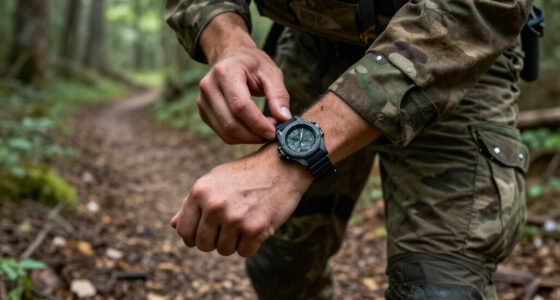
If your outdoor activities involve frequent contact with abrasive surfaces—rock climbing, hiking, or working in construction—sapphire’s scratch resistance helps keep your watch looking pristine, reducing the need for polishing or replacement. But if your activities include frequent drops on uneven terrain or impacts, mineral crystal’s impact resilience might better prevent shattering, saving you repair costs. Why does this matter? Because choosing the right crystal depends on understanding which risks are more common in your environment. For example, a search-and-rescue professional working in rocky terrains might prioritize impact resilience to avoid shattering, accepting some scratches along the way. Meanwhile, a mountain climber who values a clear, unscratched face might prefer sapphire despite the shattering risk, knowing impacts are less frequent. The tradeoff involves assessing your typical hazards and choosing accordingly—impact absorption versus scratch resistance—so your watch can stand up to your specific adventures.
Can You Repair or Polish Scratched Crystals?
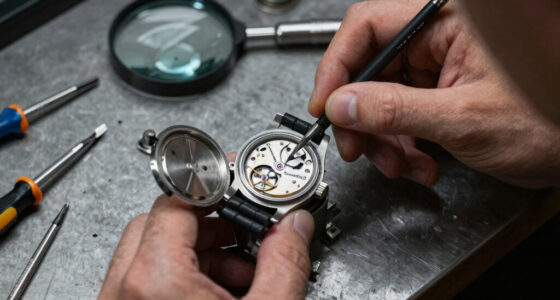
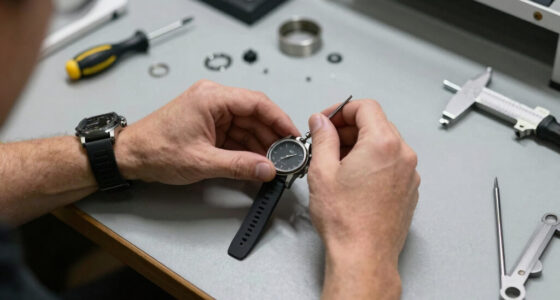
Minor scratches on mineral crystal can often be polished out with DIY kits or professional polishing services, restoring clarity and appearance. However, deep scratches or chips generally require replacing the entire crystal because polishing cannot fully repair severe damage. Sapphire crystals are even more challenging to polish—deep scratches or cracks usually mean replacement rather than repair, because attempts at polishing can introduce distortions or weaken the surface. Why does this matter? Because understanding repairability influences maintenance routines and costs. For example, minor scratches on mineral crystal can be buffed out at home, extending the lifespan of the crystal without professional intervention. But once scratches deepen or cracks develop, replacement becomes unavoidable. Similarly, sapphire’s toughness makes it less amenable to polishing—if scratched or cracked, replacement is often the only option, which can be costly. These considerations are crucial for outdoor users who may prefer materials that can be maintained or repaired easily, minimizing downtime and expense.
Final Verdict: Which Will Survive Your Field Tests?
If your priority is keeping your watch looking new over years of outdoor use, sapphire is your best bet—just be cautious with impacts, as its brittleness can lead to shattering. If you work in rough conditions where drops and shocks are frequent, mineral crystal’s impact resilience might save you from costly repairs or replacements. Why does this matter? Because each environment presents unique challenges, and understanding these tradeoffs allows you to match your choice to your specific needs. Recent technological advances—like coatings and hybrid crystals—are blurring the lines, but knowing each material’s fundamental properties remains essential for making an informed decision. Ultimately, the best choice hinges on your specific risks: scratch damage or impact shocks—and balancing these factors can significantly extend the life of your watch in demanding conditions.
Frequently Asked Questions
Is sapphire crystal really scratch-proof?
No, sapphire is highly scratch-resistant but not scratch-proof. It can crack or shatter under hard impacts. Think of it as a tough, glass-like shield—resistant to scratches but fragile if hit hard enough.Can mineral crystal be polished if it gets scratched?
Yes, minor scratches on mineral crystal can sometimes be polished out using DIY kits or professional services. But deep scratches often require replacing the crystal entirely.Which material is better for outdoor or rugged use?
If scratches are your main concern, sapphire is better. But if impacts and drops happen often, mineral crystal might survive better without shattering. Choose based on which risk matters more to you.Are coatings on sapphire crystals worth it?
Coatings can improve impact resistance and reduce glare, but their durability varies by manufacturer. Not all sapphire crystals have the same level of toughness, so check specifications.Will my watch crystal last longer if I use it daily in tough environments?
A sapphire crystal will generally stay clearer longer, but impacts can crack it. Mineral glass may resist impacts better, but scratches will accumulate faster, affecting visibility over time.Conclusion
When it comes down to field durability, neither crystal is perfect. Sapphire keeps its clarity longer but risks shattering if dropped hard. Mineral crystal absorbs shocks better but shows wear quickly. Your environment and risks should guide your choice. Remember: a watch is only as tough as its weakest point—choose your crystal accordingly, and treat it like a tool, not jewelry.Fall Picks
fall essentials
As an affiliate, we earn on qualifying purchases.