
TL;DR

Get your wardrobe favorites delivered free with Prime
- Fast, free delivery on millions of items
- Prime Video, Amazon Music and more included
- Member-only deals all year
Shock resistance in watches relies on specialized systems and materials designed to absorb impacts. Modern watches incorporate advanced shock protection to withstand everyday bumps and extreme environments, maintaining accuracy and longevity.
Ever dropped your watch onto concrete and wondered if it’s ruined? Shock resistance isn’t just a buzzword — it’s a crucial feature that keeps your watch ticking through impacts and vibrations. From military deployments to outdoor adventures, knowing how a watch defies shocks can save you from costly repairs and lost time.
In this guide, you’ll learn what makes a watch shock resistant, how those tiny parts protect your timepiece, and what recent innovations are reshaping durability standards. If you rely on your watch for work or play, understanding these details can help you choose smarter, more resilient gear.
Shock resistance relies on systems like Incabloc, which absorbs impacts before they reach delicate parts.
Modern watches use advanced materials and multi-layered protection to withstand higher shocks than ever before.
Always check for shock resistance ratings or standards like ISO 1413 when buying a durable watch.
Impact resistance isn’t foolproof — proper handling and maintenance extend your watch’s life.
Smart and tactical watches now feature impact-absorbing materials and reinforced designs for extreme conditions.
How Shock Resistance in Watches Actually Works
A shock-resistant watch is a miniature energy-management system. Springs, jewels, cushions, reinforced cases and modern composites work together to keep a sudden impact away from the parts that regulate time.
What happens when a watch hits the ground?
The case stops abruptly, but its internal components want to keep moving. Shock protection lengthens that deceleration, redirects the load and prevents concentrated force from reaching the movement’s most delicate points.
Impact enters the case
A drop, strike or vibration creates a sharp acceleration pulse through the exterior.
Structure spreads the load
Reinforced walls and bumpers distribute energy across a wider area.
Cushions slow the pulse
Gaskets, polymers and movement mounts deform to absorb part of the energy.
Jewel setting yields
A spring-loaded setting moves just enough to protect the balance staff pivot.
Protect the regulator
The balance wheel and escapement contain fine pivots that can bend or snap. Systems such as Incabloc and Kif create a controlled escape path for impact energy.
Protect the whole assembly
With fewer fragile mechanical pivots, protection shifts toward circuit boards, displays, batteries, sensors, reinforced glass and secure internal mounting.
Inside the Incabloc system
A lyre-shaped spring retains a cap jewel and hole jewel. During a shock, the setting can move axially or laterally, allowing the thicker shoulder of the balance staff to take the load instead of its needle-fine pivot.
Simple, tiny and automatically resetting.
The spring returns the jewel setting to its working position after the shock. That combination of controlled movement and precise recovery has kept the principle relevant for generations.
Relative impact scale
Illustrative comparison against the commonly cited watch-test range.
G-force alone does not tell the whole story. Impact duration, direction, contact surface, case geometry and movement mounting all influence whether damage occurs.
No single feature does everything
The strongest designs combine external protection, internal cushioning and component-level safeguards. Each layer handles a different part of the impact pathway.
| Protection feature | Where it acts | Primary benefit | Tradeoff | Role |
|---|---|---|---|---|
| Incabloc / Kif | Balance jewel setting | Protects fragile pivots through controlled movement | Added movement complexity | ✓ Essential |
| Rubber gaskets & cushions | Between movement and case | Dampens vibration and reduces transmitted shock | Materials age and need inspection | ✓ Layered |
| Reinforced case & bumpers | Exterior structure | Spreads impact before it reaches the movement | Greater bulk and weight | ✓ Strong |
| Advanced composites | Case, carrier or internal layers | Absorbs energy with relatively low mass | Higher cost and manufacturing demands | ~ Varies |
| “Shock resistant” label alone | Marketing or case marking | Useful only when tied to a defined test or standard | Can lack meaningful detail | ✗ Verify |
Keep energy outside
Thicker case structures, raised bezels and bumpers behave like miniature crumple zones, taking the first hit.
Isolate the movement
Flexible mounts, gaskets and polymer rings reduce the acceleration passed from the case to the mechanism.
Save the fragile pivot
Spring-loaded jewel settings provide a final line of defense where microscopic tolerances matter most.
More shockproof through materials, layers and testing
Today’s toughest watches build on classic mechanical ideas with high-tech polymers, reinforced glass, composite carriers and real-world testing protocols.
Impact-absorbing composites
Engineered polymers and lightweight composites deform predictably, spreading force more evenly than a rigid metal-only structure.
Multi-layer suspension
Jewel protection, movement cushions and outer bumpers operate in sequence so no individual defense must handle the entire impact.
Ruggedized smartwatches
Reinforced glass, protected buttons, shock-damping housings and secure electronics help modern devices survive demanding use.
The protection chain
A drop or strike creates the initial energy pulse.
The outer structure spreads and redirects the load.
Flexible materials slow the transfer into the movement.
The spring setting yields to save the balance pivot.
The regulator survives and normal timekeeping continues.
What to look for
Shock resistance reduces risk; it does not make a watch indestructible. Match the protection level to how and where the watch will be used.
Check the standard. Look for ISO 1413 or a clearly described manufacturer testing protocol.
Look for layered protection. A reinforced case, cushioned movement and protected regulator work better together.
Consider the tradeoff. Extreme protection can add thickness, weight, cost and visual bulk.
Inspect after a severe hit. New timing errors, loose parts or display issues are reasons to seek professional service.
Maintain the defenses. Gaskets and cushioning materials can degrade, so periodic checks help preserve performance.
What Does Shock Resistance Really Mean for Your Watch?
Shock resistance is a watch’s ability to survive sudden impacts without breaking or losing accuracy. It’s about protecting the tiny, delicate parts inside — especially the balance wheel and escapement in mechanical watches. When a watch is shock resistant, it means it can endure impacts that would typically cause damage or disrupt timekeeping.
The importance of this feature extends beyond mere durability. For example, if you’re an outdoor enthusiast or professional working in volatile environments, a shock-resistant watch ensures your device remains reliable under physical stress. This reduces the risk of costly repairs, prevents downtime, and preserves the watch’s precision. The tradeoff, however, can be added weight or bulk, as protective systems sometimes require extra materials or design complexity. Understanding these implications helps you choose a watch that balances durability with comfort, tailored to your specific needs.
As an affiliate, we earn on qualifying purchases.
How Do Watch Makers Keep Impact From Breaking Their Delicate Parts?
Watchmakers employ sophisticated systems and carefully selected materials to mitigate the effects of impacts. The most renowned is the Incabloc shock protection system, which uses a tiny spring and jewel setting to allow the balance wheel to move slightly during a shock. This movement absorbs the impact energy, preventing it from transferring directly to the fragile pivots and escapement, which are critical for accurate timekeeping.
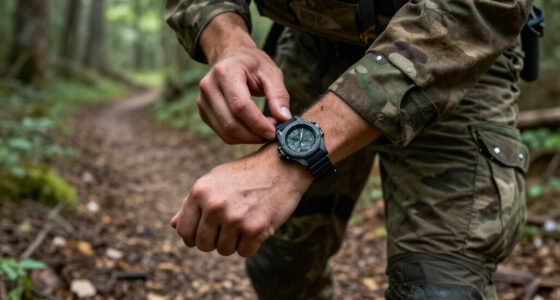
Beyond Incabloc, other features like reinforced cases, shock-absorbing gaskets, and impact-resistant alloys serve to distribute and dampen shocks. For instance, a military-grade field watch often incorporates a robust case with shock bumpers that act like crumple zones, absorbing and dispersing energy before it reaches the movement. These design choices often involve tradeoffs; for example, adding shock protection can increase weight and size, potentially affecting wearer comfort. The key is balancing protection with practicality, ensuring the watch remains functional and comfortable while offering sufficient impact resilience.
Designing for impact resistance means understanding the typical forces a watch might encounter and tailoring the protection accordingly. For example, a diver’s watch might be tested for drops onto rocky terrain, which involves understanding real-world impacts and ensuring the watch can withstand them without compromising its integrity or performance. These protective features are a testament to how precision engineering can turn fragile components into durable systems capable of withstanding the rigors of active lifestyles.
impact resistant watch for outdoor activities
As an affiliate, we earn on qualifying purchases.
As an affiliate, we earn on qualifying purchases.
What Are the Best Shock Protection Features in Modern Watches?
Modern watches integrate traditional shock protection with innovative materials and design strategies to enhance durability. Here’s a quick rundown in a comparison table:
| Feature | Description |
|---|---|
| Incabloc System | A spring-loaded jewel setting that absorbs shocks, widely adopted since the 1930s. Its effectiveness lies in allowing the delicate balance wheel to move slightly during impacts, preventing damage. This system’s longevity and simplicity make it a cornerstone of shock protection, though it may add slight complexity and weight to the movement. |
| Rubber Gaskets & Cushions | These components seal and cushion the movement within the case, absorbing vibrations and impacts. They help prevent shock transmission from external forces, but their effectiveness depends on material quality and proper sealing, which can degrade over time and require maintenance. |
| Shock-Resistant Materials | Utilization of impact-absorbing alloys, synthetic rubies, and advanced composites enhances internal protection. These materials are chosen for their ability to disperse impact energy and reduce stress on critical parts, but they often involve higher manufacturing costs and complexity. |
| Reinforced Cases & Bumpers | External protective features designed to absorb shocks before they reach the movement. These can include thickened case walls, shock-absorbing bumpers, and textured surfaces. While they improve durability, they can also make watches bulkier and less elegant, highlighting a tradeoff between form and function. |
| Advanced Testing Standards | Modern watches undergo rigorous impact testing, simulating real-world scenarios to validate their shock resistance. These standards ensure the watch can handle impacts from activities like sports or heavy work, but they also set higher manufacturing and quality control benchmarks that can influence cost and availability. |
High-end sports and military watches often combine several of these features, creating layered defenses that significantly enhance impact resilience. This layered approach reflects a deep understanding that no single feature can provide complete protection, and it emphasizes the importance of comprehensive design for demanding environments.
As an affiliate, we earn on qualifying purchases.
Recent Innovations That Make Watches More Shockproof Than Ever
In recent years, shock resistance has advanced significantly thanks to the development of new materials and testing techniques. Manufacturers now incorporate composite materials that can absorb impacts more effectively than traditional metals. For example, impact-absorbing polymers layered within the case can dissipate energy more evenly, reducing the stress transferred to internal components. This innovation is especially valuable in tactical or adventure watches, where durability is paramount.
Another notable trend is the integration of multi-layered shock absorption systems. These combine traditional jewel settings with shock-absorbing polymers or gel layers, creating a buffer that can handle multiple impacts without damage. Smartwatches have also evolved, featuring ruggedized cases with shock-resistant bumpers, reinforced glass, and impact-absorbing materials that enable them to survive drops from over 6 feet onto concrete. These advancements are driven by the need for devices that can withstand the unpredictable rigors of everyday life and extreme conditions, extending the lifespan and reliability of modern timepieces.
According to The H Time, these innovations mean your watch can handle impacts and drops that previously would have been catastrophic, making them more reliable for active users and professionals in demanding environments. The tradeoff, however, often involves increased manufacturing complexity and cost, which can influence the affordability and weight of the final product. Nevertheless, the evolution of shock resistance technology continues to push the boundaries of what watches can endure, ensuring they remain dependable tools in the most challenging situations.
mechanical watch shock protection system
As an affiliate, we earn on qualifying purchases.
As an affiliate, we earn on qualifying purchases.
What You Need to Know Before Buying a Shock-Resistant Watch
If you want durability, look for watches with clear shock resistance ratings. Many brands mark their watches with “Shock Resistant” or mention compliance with ISO 1413. These standards specify the minimum impact forces the watch can withstand, giving you a benchmark for expected durability. However, it’s essential to understand that no watch is indestructible; ratings indicate a level of resilience but do not guarantee immunity from damage under all circumstances.
For active lifestyles, prioritize models with reinforced cases, impact-absorbing bumpers, and tested shock standards. Materials like impact-resistant alloys or composites often outperform traditional metals because they can better absorb and dissipate energy. Additionally, consider the size and weight of the watch; a larger, bulkier watch may offer more protection but could be less comfortable for everyday wear. The tradeoff between robustness and comfort is key, especially if you plan to wear the watch daily or during high-impact activities.
Understanding these factors allows you to select a watch tailored to your environment and activity level. Investing in a well-rated shock-resistant watch can save money and frustration over time by reducing the likelihood of damage, especially in challenging conditions.
Handling Your Shock-Resistant Watch Like a Pro
Even the toughest watches aren’t invincible. Avoid dropping or hitting your watch on hard surfaces when possible, as repeated impacts can weaken protective systems over time. After any significant impact, have it inspected by a professional — especially if you notice discrepancies in timekeeping or visible damage. Regular maintenance and calibration help keep shock protection systems functioning optimally, ensuring long-term durability.
For outdoor or high-impact activities, consider additional protective accessories like bumpers or impact-resistant cases. These can absorb some of the energy from shocks, reducing stress on internal components and extending the lifespan of your watch. Proper handling also includes avoiding exposure to extreme shocks or vibrations that exceed the watch’s rated standards, as these can compromise the internal shock-absorbing mechanisms.
Remember, treating your watch with care complements its engineering — shock resistance is a safety net, not a license for rough handling. Being mindful of how you wear and handle your watch will ensure it continues to perform reliably in demanding situations.
Conclusion
Shock resistance isn’t just a feature — it’s a carefully engineered safeguard that keeps your watch ticking through impacts. Modern innovations have made watches more durable than ever, but they still need respect and proper care.
Think of your watch as a tiny tank — built to take hits, not to be thrown against walls. Treat it well, and it’ll be there when you need it most, whether on a mountain trail or in a busy field operation.
Columbus Day / Indigenous Peoples' Day Picks
long weekend sales
As an affiliate, we earn on qualifying purchases.