
TL;DR

Get your wardrobe favorites delivered free with Prime
- Fast, free delivery on millions of items
- Prime Video, Amazon Music and more included
- Member-only deals all year
The ideal field watch case size balances comfort, readability, and style. For small wrists, 36-38mm works best; larger wrists may prefer 40-42mm, but personal preference is key.
Picking the right field watch isn’t just about looks—it’s about how it feels, how easy it is to read, and how well it fits your lifestyle. The size of the case can make or break your experience, especially if you’re active or outdoors.
This guide breaks down the key aspects of watch sizing, recent trends, and practical tips so you can confidently pick a case that suits your wrist and needs. No fluff, just real-world advice to help you find that perfect fit.
Small wrists (under 6.5 inches) should focus on 36-38mm cases for comfort and proportion.
Modern trends lean toward 40mm cases, which offer better readability without sacrificing wearability.
Material choice impacts both weight and durability — lighter materials like titanium make larger sizes more manageable.
Measure your wrist accurately for the best fit—don’t guess or rely solely on visual estimates.
Comfort isn’t just size—thickness, strap, and case shape matter just as much.
Finding the right case for your wrist.
The ideal field watch balances comfort, readability and purpose. Traditional 36–38mm cases remain beautifully practical, while modern 40mm designs add legibility without sacrificing wearability. Your wrist—not the trend cycle—makes the final call.
Match the case to your wrist—not the catalog photo.
Diameter is the starting point. The best fit also keeps the lugs within your wrist, sits securely during movement and remains easy to read at a glance.
Small wrist
Compact proportions reduce overhang and keep the watch unobtrusive during active use.
Best fit: 36–38mmMedium wrist
The broadest fit window: vintage-inspired 38mm through modern, highly legible 42mm cases.
Best fit: 38–42mmLarge wrist
Larger cases can look proportionate, but thickness and lug shape still determine comfort.
Best fit: 42mm+Your wrist size in three simple steps.
A visual guess is unreliable. Measure where the watch will actually sit, then use the number as a practical starting point—not an inflexible rule.
Wrap
Place a flexible measuring tape around your wrist, just below the wrist bone.
Record
Note the circumference in inches or centimeters without pulling the tape too tightly.
Compare
Match the measurement to the recommended case range, then assess lugs and thickness.
No flexible tape? Wrap a piece of string around your wrist, mark the overlap, then measure the string against a ruler.
Why modern field watches are getting bigger.
A slightly larger dial creates room for bold numerals and luminous markers. Titanium and composite cases offset the added dimensions with lower weight.
| Feature | Traditional military watch | Modern field watch |
|---|---|---|
| Case diameter | 36–38mm | 40–42mm |
| Material | Stainless steel or brass | Titanium or composite options |
| Weight | More weight for its size | Lighter through advanced materials |
| Readability | Good, with smaller numerals | Enhanced numerals and lume |
| Visual character | Understated and historically faithful | Bold, rugged and contemporary |
Diameter is only one part of the fit.
Thickness, lug shape, strap flexibility and case material can make two watches with the same diameter feel completely different.
Five rules for getting the fit right.
Use specifications to narrow the field, then let real-world comfort decide. A watch should remain stable, readable and easy to forget until you need it.
Measure accurately. Start with circumference instead of guessing from appearance.
Try multiple sizes. Specifications cannot fully predict wrist presence.
Balance readability and comfort. Bigger is useful only when it remains wearable.
Match your activity. Outdoor or tactical use may justify a more rugged case.
Reduce weight. Titanium makes a larger case easier to wear for long periods.
What size is best for a small wrist?
Usually 36–38mm. This range offers balanced proportions without unnecessary bulk.
Can a larger watch still look subtle?
Yes. Choose a slim case, restrained dial and lightweight material to soften its presence.
Are bigger cases always more durable?
No. Material quality, construction and shock protection matter more than diameter alone.
What is the traditional military size?
Most classic field-watch proportions sit around 36–38mm, prioritizing practicality.
Comfort, readability and purpose beat trend-driven sizing.
Measure your wrist, check the complete case geometry and try the watch in motion. A well-fitting field watch looks balanced, performs better and stays comfortable wherever the day takes you.
What size watch case fits your wrist? Here’s the quick answer
For small wrists (under 6.5 inches), a case diameter of 36-38mm is comfortable and unobtrusive. Medium wrists (6.5-7.5 inches) handle 38-42mm cases well. Larger wrists (over 7.5 inches) can wear 42mm or bigger, but the key is balancing size with comfort.
Choosing a size involves understanding how the watch’s dimensions relate to your wrist’s proportions. A watch that’s too large can feel cumbersome and look disproportionate, while one that’s too small might be hard to read or appear insubstantial. The goal is harmony: a case size that complements your wrist, enhances readability, and matches your style preferences. Consider also how the watch’s thickness and strap width influence overall comfort and appearance, as these factors interplay with case diameter to create a balanced look and feel.
As an affiliate, we earn on qualifying purchases.
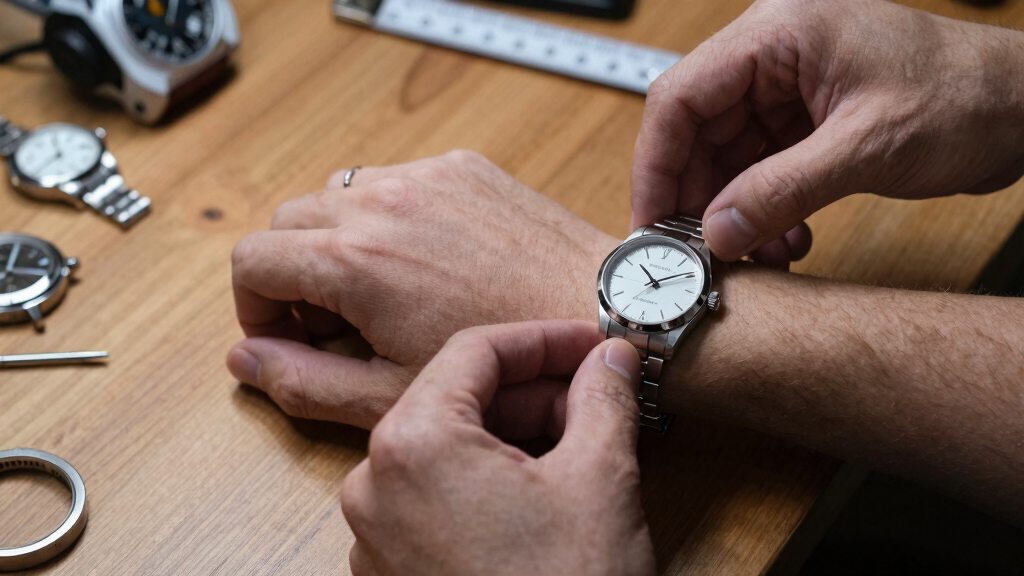
How to measure your wrist size in 3 simple steps
- Wrap a flexible measuring tape around your wrist, just below the wrist bone.
- Note the measurement in inches or centimeters.
- Compare your measurement to standard case sizes to find your best fit.
If you don’t have a tape, use a piece of string and then measure that against a ruler.
As an affiliate, we earn on qualifying purchases.
Why modern field watches are getting bigger — and why that’s not a bad thing
Today’s field watches often hover around 40mm, blending tradition with a modern boldness. This size improves readability—big numerals, luminous markers—while still feeling rugged and purposeful. Advances in lightweight materials like titanium keep larger cases comfortable.
For example, a 40mm titanium watch weighs less than a 38mm stainless steel model, making it perfect for outdoor adventures without weighing you down.
lightweight titanium watch for men
As an affiliate, we earn on qualifying purchases.
As an affiliate, we earn on qualifying purchases.
Comparison table: Traditional vs. modern field watch sizes
| Feature | Traditional Military Watches | Modern Field Watches |
|---|---|---|
| Case Diameter | 36-38mm | 40-42mm |
| Material | Stainless Steel, Brass | Titanium, Composite |
| Weight | Heavier | Lighter, thanks to advanced materials |
| Readability | Good, but smaller numerals | Enhanced, larger numerals & luminous markers |
As an affiliate, we earn on qualifying purchases.
What makes a watch comfortable for your wrist?
Comfort depends on more than just diameter. Thickness, strap width, and case shape matter. A thicker watch (above 12mm) can feel bulky, especially during active movement. Slim profiles (around 9-11mm) sit snugly under cuffs and don’t interfere with wrist motion.
For example, a 38mm, 10mm thick watch with a flexible nylon strap can feel barely there on a small wrist, perfect for daily use outdoors.
Tradeoffs exist: thinner watches might compromise some durability or water resistance, while thicker ones may offer extra protection but at the expense of comfort. Finding the right balance depends on your activity level and personal preferences. If you’re frequently active, prioritize lightweight and slim profiles to avoid fatigue. If durability is paramount, slightly thicker cases with robust materials might be preferable, even if they feel more substantial.
Your top 5 tips for choosing the right size field watch
- Measure your wrist accurately before shopping.
- Try on different sizes if possible—what looks good on paper might feel off in real life.
- Balance readability with comfort—bigger isn’t always better if it feels bulky.
- Think about your typical activities—outdoor work or tactical use may favor larger, rugged cases.
- Consider lightweight materials for larger cases to reduce fatigue.
Frequently Asked Questions
What size watch is best for a small wrist?
A case diameter of 36-38mm is ideal for small wrists, offering a balanced look and comfortable fit without feeling heavy or bulky.
Can I wear a larger watch if I prefer a subtle look?
Yes, but choose a larger case with a slim profile and lightweight material to prevent it from feeling cumbersome. Personal comfort is key.
How do I know if a watch will fit my wrist?
Measure your wrist with a flexible tape at its widest point. Use that measurement to compare against standard case sizes, or try watches in person when possible.
Are bigger cases always more durable?
Not necessarily. Durability depends on the case material and construction. Larger cases can offer more protection, but quality matters more than size alone.
Is there a standard size for military field watches?
Yes, traditional military field watches typically measure around 36-38mm, emphasizing practicality and ease of use in demanding conditions.
Conclusion
Choosing the right field watch size isn’t about following trends; it’s about what feels right on your wrist. Comfort, readability, and purpose should guide your decision. Take the time to measure and try different options—your perfect watch is out there.
Remember: a well-fitting watch doesn’t just look good. It performs better, feels better, and keeps you ready for whatever’s next.
Fall Picks
fall essentials
As an affiliate, we earn on qualifying purchases.