
TL;DR

Get your wardrobe favorites delivered free with Prime
- Fast, free delivery on millions of items
- Prime Video, Amazon Music and more included
- Member-only deals all year
A military-grade watch withstands extreme conditions through rugged construction, high water and shock resistance, and reliable accuracy. Many meet or exceed standards like MIL-STD-810, making them suitable for both military use and tough outdoor activities.
If you think all watches are created equal, think again. A true military-grade watch isn’t just about looking tough. It’s about surviving the worst conditions—shock, water, extreme temps—without missing a beat. When your gear is on the line, you want a timepiece that’s built to last, no matter what.
In this guide, you’ll learn what makes a watch genuinely capable of handling the chaos of combat zones, outdoor expeditions, or high-stakes jobs. Forget flashy features; durability, reliability, and real-world toughness are the name of the game.
A true military watch combines rugged construction with high reliability and features tailored for extreme conditions.
Materials like sapphire, titanium, and reinforced polymers significantly boost durability and scratch resistance.
Water resistance ratings of 200 meters or more are essential for underwater or high-altitude operations.
Many military watches meet standards like MIL-STD-810, but real toughness often exceeds certification.
Latest innovations blend advanced materials with smart tech, making modern military watches more versatile than ever.
Built to Keep Time When Conditions Stop Being Civilized
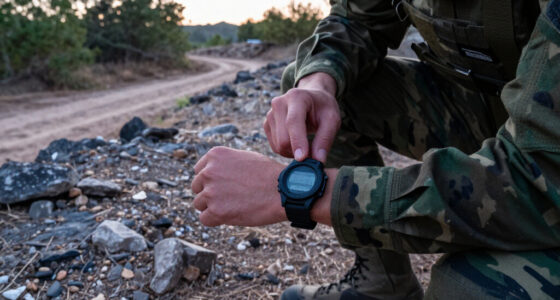
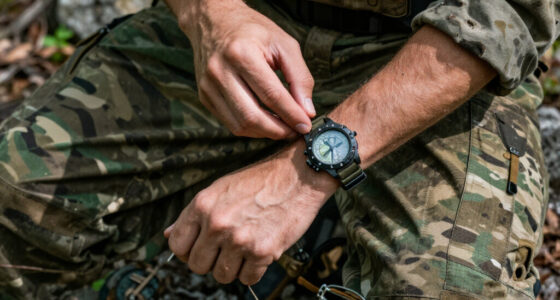
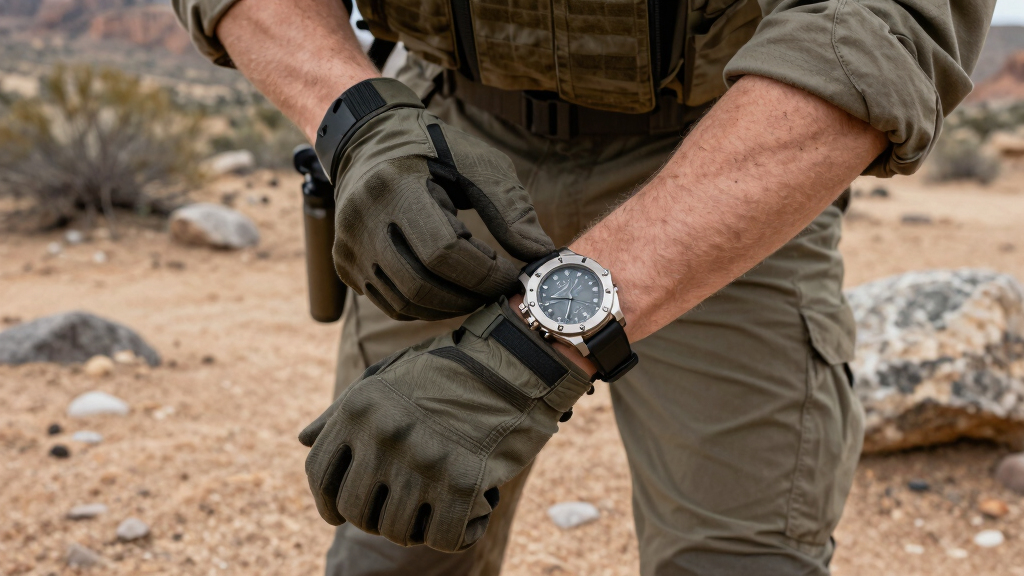
A military-grade watch is not a costume piece. It earns the label through rugged construction, serious water and shock resistance, high legibility, and accuracy that holds up when heat, cold, vibration, pressure, and rough handling all arrive at once.
Real toughness is measured by survival under stress, not by how tactical the watch looks on a product page.
The Four Non-Negotiables
A true military watch combines material strength, environmental resistance, instant readability, and dependable movement architecture. Miss one of these and the watch may still be rugged, but it is not truly field-ready.
Rugged Case First
Stainless steel, titanium, reinforced polymers, carbon composites, and shock-absorbing case structures protect the movement when the watch gets dropped, struck, or scraped.
Water Is the Enemy
Field watches need gaskets, crowns, crystals, and casebacks that resist moisture and pressure. For diving or severe wet exposure, 200 meters is the practical starting point.
Readable Under Stress
High-contrast dials, large markers, anti-reflective coatings, tritium, or Super-LumiNova reduce hesitation when seconds matter and lighting is poor.
Military Grade vs. Regular Tough
The phrase “military-grade” is often used loosely. The useful question is whether the watch’s materials, tests, and features match the environment you actually expect it to survive.
| Criterion | Ordinary Watch | True Military-Grade Watch | Why It Matters |
|---|---|---|---|
| Shock Resistance | ~ Light bumps only | ✓ Built for drops, vibration, recoil, and impact | Protects the movement and crystal during rough handling. |
| Water Rating | ✗ Splash or swim rated | ✓ Often 200 meters or more | Prevents failure during diving, storms, crossings, and wet field work. |
| Legibility | ~ Style-led dial | ✓ Luminous, high-contrast, anti-reflective | Reduces misreads when light, pressure, and time are against you. |
| Testing | ✗ Brand claims only | ~ May meet or exceed MIL-STD-810 or ISO tests | Certifications help, but real-world durability still matters. |
| Power | ~ Standard battery or automatic | ✓ Quartz, solar, long-life battery, or robust mechanical | Keeps the watch operational when maintenance is difficult. |
How to Pick the Right Field Watch
Start with the mission environment, then choose features that solve specific failure points. Flashy extras are useful only when they support the work.
Identify Terrain
Water, altitude, cold, heat, sand, shock, or daily field abuse all demand different strengths.
Set the Rating
Use 200 meters as the baseline for diving or heavy water exposure, then check seals and crown design.
Choose Movement
Pick quartz for maximum accuracy and low maintenance, or mechanical for craft and traditional appeal.
Check Visibility
Look for luminous markers, high contrast, anti-reflective coating, and a dial you can read instantly.
Verify Proof
Read test data, field reviews, and certification claims instead of trusting the word “military” alone.
Standards, Materials, and Tradeoffs
MIL-STD-810 is a useful signal because it covers environmental stress such as shock, vibration, temperature, and humidity. It is not the only path to toughness, and not every strong watch carries formal certification.
Material Durability Spectrum
Reinforced polymers absorb shock well, titanium cuts weight, sapphire resists scratches, and carbon or ceramic composites push modern durability further.
Feature Utility Spectrum
Compass bezels, GMT functions, chronographs, barometers, altimeters, GPS, solar charging, and extended batteries matter when they match the job.
Practical Takeaway
Prioritize the environment first: underwater work needs pressure resistance, field abuse needs shock architecture, night operations need lume, and long deployments need dependable power. The best military-grade watch is the one whose toughness matches your actual risk.
Modern Military Watch Features
Recent innovation blends advanced materials with smarter power and sensor systems, but the core principle remains the same: the watch must stay useful when conditions become hostile.
Carbon, Ceramic, Coatings
New composites, scratch-resistant coatings, and lighter metals improve durability without always adding bulk.
GPS and Sensors
Some rugged smartwatches add navigation, fitness data, communication features, altimeters, and barometers.
Solar and Long-Life
Extended batteries and solar charging reduce maintenance during expeditions or long periods away from power.
Mission-Tuned Setup
Interchangeable straps, configurable displays, and task-focused complications help adapt one watch to different roles.
Traceability Chain
The clearest way to evaluate a military-grade watch is to connect the threat to the protective feature, then to the field outcome.
Bottom Line
A truly military-grade watch is rugged, readable, pressure-resistant, accurate, and proven. Certification helps, but the real test is whether it keeps working when the environment tries to break it.
Why Rugged Construction Matters More Than Looks
A true military watch stands up to impacts, vibrations, and rough handling. Think about dropping your watch on rocky terrain or getting slammed into a doorframe. A military-grade watch uses reinforced cases made from stainless steel, titanium, or high-tech polymers. These materials absorb shocks and resist scratches.
For example, the Casio G-Shock line is famous for its shock-absorbing resin cases that survive drops onto concrete. Military units rely on similar concepts—if a watch breaks, it’s useless in the field. Durability isn’t a feature; it’s the foundation.
Understanding this helps you realize why these watches often trade off some aesthetic finesse for maximum resilience. The tradeoff is that they tend to be bulkier or less refined in appearance, but that’s a small price for reliability in critical situations. Choosing rugged construction means prioritizing function over form, which is vital when your survival depends on it.
**Practical Takeaway:** When selecting a military-grade watch, focus on the materials and construction. Look for shock-resistant cases, reinforced bands, and scratch-proof crystals. Test reviews and certifications can guide your choice, but real-world durability is what matters most.
As an affiliate, we earn on qualifying purchases.
How Water and Pressure Resistance Save Lives
Water resistance is more than just a feature; it’s a safety net in unpredictable environments. A watch rated at 200 meters or more isn’t just for swimming—it’s designed to withstand high-pressure underwater conditions, which can be encountered during dives or in stormy weather. High pressure resistance ensures the watch’s seals and internal components remain uncompromised, preventing water ingress that could cause malfunction or damage.
The implications are significant: in rescue or military operations, a compromised watch can lead to miscalculations or missed timing, risking lives. For instance, a diver’s watch that fails underwater could result in loss of orientation or even decompression issues. The Luminox Navy SEAL series exemplifies this, as it’s built to endure extreme pressure, giving divers and command units confidence that their timing device will perform under stress. This level of resilience often involves tradeoffs, such as increased weight or size, but these are justified by the critical need for reliability in life-or-death situations.
**Practical Takeaway:** Before buying, check the water resistance rating and ensure it matches your operational environment. For diving or heavy water exposure, opt for at least 200 meters. Use this as a baseline to evaluate other features like seals and case construction, ensuring your watch can handle pressure and moisture in real-world scenarios.
As an affiliate, we earn on qualifying purchases.
What Makes a Watch Easy to Read in the Dark and Chaos
Visibility in low-light conditions is essential for safety and operational effectiveness. Military watches incorporate luminous materials like tritium or Super-LumiNova that glow brightly and consistently over long periods without needing external light sources. This ensures that even during extended blackouts or night operations, the time remains clearly visible. The choice of high-contrast dials and large, luminous markers is deliberate: it reduces the cognitive load on users, allowing quick and accurate reading under stress.
The real-world implication is straightforward: in high-stakes environments, seconds matter, and misreading the time can have serious consequences. The ability to quickly glance at your watch and get an accurate reading can be the difference between mission success and failure. The tradeoff here involves design complexity and potential brightness tradeoffs, but the benefits in critical scenarios are undeniable.
**Practical Takeaway:** When selecting a tactical watch, prioritize luminous features and high-contrast dials. Test the brightness and longevity of the lume in low-light conditions before purchase. Remember, in critical moments, quick and accurate readability can be life-saving.
As an affiliate, we earn on qualifying purchases.
Why Accuracy and Reliability Are Critical
Precision in timing isn’t just about keeping schedules; it’s about operational success and safety. In environments where milliseconds matter, a reliable watch ensures synchronization across units, coordination of maneuvers, and accurate navigation. Quartz movements are favored for their accuracy and low maintenance, but high-grade mechanical calibers are also used where durability and tradition are valued. Some watches incorporate features like chronographs or GMT functions to enhance their utility, enabling users to track multiple time zones or measure elapsed time—crucial for coordinating international or multi-phase missions.
Understanding these features reveals the tradeoffs involved. Quartz watches tend to be more accurate but may lack the charm or mechanical appeal some users prefer. Mechanical watches, while more susceptible to shocks and temperature variations, often appeal to enthusiasts for their craftsmanship. The key is balancing precision with robustness, depending on your operational needs and personal preferences.
**Practical Takeaway:** When choosing a military-grade watch, consider how critical timing precision is for your missions. Opt for quartz if accuracy is paramount, but don’t overlook mechanical options if you value craftsmanship and traditional appeal. Match the movement type to your operational environment and personal needs for optimal performance.
As an affiliate, we earn on qualifying purchases.
Must-Have Features That Make a Difference
Additional features extend a watch’s functionality in demanding environments. For example, compass bezels assist with navigation when GPS isn’t available, especially in remote areas. Altimeters and barometers help monitor environmental conditions, providing early warnings of weather changes—crucial for planning and safety. Toughened sapphire crystals resist scratches, maintaining clarity over time, which is vital when quick readings are needed. Extended battery life or solar power ensures the watch remains operational without frequent recharging, reducing maintenance needs in the field.
**Practical Takeaway:** When selecting a military watch, identify which features are essential for your missions. Use a decision framework: assess your environment, prioritize critical features like water resistance or navigation tools, and verify durability specs. Investing in a watch with the right combination of features can significantly enhance your operational effectiveness and safety in unpredictable conditions.
Are All Military Watches Certified? What Does That Mean?
While not all military watches carry official certifications, many are tested against rigorous standards like MIL-STD-810, which simulates real-world hazards such as shock, vibration, extreme temperatures, and water exposure. Certification indicates that a watch has passed specific tests, but it doesn’t necessarily guarantee performance in every scenario. Some manufacturers produce watches that exceed these standards without official certification, focusing on real-world durability over paperwork. This means that a well-designed non-certified watch might outperform a certified one in actual field conditions.
**Practical Takeaway:** When evaluating a military watch, look beyond certifications. Research how the watch has performed in real-world tests and reviews. Prioritize brands known for their durability and field performance. Certification can be a helpful benchmark, but your decision should focus on the actual operational resilience of the watch to ensure it meets your specific needs.
What Are The Latest Innovations in Military Watches?
Recent technological advances focus on improving materials and integrating new tech. Use of ceramics, carbon composites, and advanced coatings enhances scratch resistance, reduces weight, and improves thermal stability. Smart features—such as GPS, communication modules, and fitness tracking—are increasingly incorporated, blurring the lines between traditional rugged watches and modern tech devices. These innovations aim to provide soldiers and outdoor enthusiasts with gear that’s not only tough but also connected and multifunctional.
For example, a GPS-enabled military watch can be ruggedized to withstand impacts and water, allowing users to navigate accurately while maintaining durability. The tradeoff with these innovations often involves increased complexity, cost, and potential points of failure, but the benefits are significant: a single device that combines resilience with modern connectivity, reducing the need for multiple gadgets.
**Practical Takeaway:** When considering new technology, evaluate whether features like GPS, communication, or sensors are essential for your missions. Focus on devices that balance durability with technological innovation, and choose brands with proven track records in rugged tech. Incorporate these features thoughtfully to enhance operational capability without sacrificing reliability.
How to Pick the Best Military-Grade Watch for You
- Identify your environment: underwater, high shock, cold weather?
- Choose features that match your needs: compass, altimeter, GPS?
- Check water resistance ratings: aim for at least 200 meters for most outdoor use.
- Prioritize materials: sapphire crystal, titanium case, reinforced bands.
- Set a budget, but focus on quality and proven standards.
Practical Action Steps: Start by assessing your primary operational environment—are you diving, mountain climbing, or working in extreme cold? Based on that, select a watch with the appropriate water resistance, shockproof features, and environmental sensors. Use checklists to compare models, focusing on durability ratings, material quality, and feature sets. Test or verify lume visibility and ease of use in real-world conditions. Investing time in this decision ensures your watch performs when it matters most, helping you avoid failures or compromises in critical moments.
Frequently Asked Questions
Can I wear a military-grade watch every day?
Absolutely. Their rugged build and reliable mechanics make them perfect for daily wear, especially if you’re outdoors or in physically demanding environments. Plus, they often look sharp enough for casual settings.
Are military watches better than regular sports watches?
For toughness and environmental resistance, yes. Military watches are designed for extreme conditions, while sports watches focus more on fitness tracking. If you need resilience, a military-grade watch outperforms most standard sports models.
What’s the real difference between a military and a tactical watch?
“Military” often refers to watches built to meet strict standards, while “tactical” can be a marketing term. Tactical watches may include features like night vision compatibility or silent modes but aren’t always tested to military standards.
Do smartwatches qualify as military-grade?
Some rugged smartwatches meet military standards for shock and water resistance, but traditional military watches tend to be analog with mechanical or quartz movements. Check the specs to be sure.
How long do military batteries last?
Battery life varies, but many are designed to last at least 12-24 months on a single charge or battery, with solar-powered options extending this considerably. Durability also means maintaining power in demanding environments.
Conclusion
When seconds count, your watch must be more than just stylish. It needs to survive impacts, water, and temperature swings—without missing a beat.
Choose a watch built to withstand chaos, and it will serve you well in the toughest moments. Durability isn’t just a feature; it’s your gear’s backbone.
Halloween Picks
halloween
As an affiliate, we earn on qualifying purchases.