
TL;DR

Get your wardrobe favorites delivered free — and shop member deals
- Fast, free delivery on millions of items
- Access to Prime Big Deal Days deals on October 6–7
- Prime Video, Amazon Music and more included
A 24-hour watch dial shows the entire day on a single rotation, with the hour hand pointing from 0 to 23. It clearly indicates day or night without confusion, ideal for military and outdoor use. Learning to read it is straightforward with practice, especially when understanding the scale and hand positions.
Ever looked at a watch and felt lost because it shows 24 hours instead of 12? That’s the power of a 24-hour dial. It’s a tool built for clarity in environments where confusion costs time or safety. Whether you’re operating in remote wilderness, on a military mission, or in aviation, understanding how to read this dial can save you from mistakes.
This guide cuts through the confusion. You’ll learn exactly how to interpret the scale, what to watch for on different models, and how it fits into your daily routines. Get ready—this isn’t just about telling time. It’s about reading it with precision and confidence.
A 24-hour watch dial shows the entire day from 0 to 23 hours, making day/night distinction instant and clear.
Read the hour hand directly against the 0-23 scale for quick, accurate time, especially in professional or outdoor settings.
Practice frequently at different times to develop familiarity with the scale and hand positions.
Compare 24-hour and 12-hour dials to understand which suits your routine—clarity vs. conventional familiarity.
Use contrast, lighting, and visual cues to read the dial quickly in all conditions.
What Is a 24-Hour Watch Dial and Why It Matters
A 24-hour watch dial displays the entire day in one rotation, numbered from 0 to 23. Unlike standard watches, where the hour hand cycles twice every 24 hours, here it completes a full circle once daily. This design was born out of military needs, aviation clarity, and outdoor precision—eliminating the ambiguity of AM and PM.
Imagine you’re stationed in a remote outpost, checking your watch at midnight. A 12-hour dial shows 12, which could be either noon or midnight. A 24-hour dial makes it clear—it’s 0 hours, or midnight—no guessing involved. That instant clarity can make all the difference in high-stakes situations.
Understanding why this matters goes beyond just reading the time. In critical environments, knowing whether it’s day or night can influence decisions—such as when to rest, when to execute a mission, or when to be alert. The 24-hour format removes the cognitive load of mental conversions, reducing errors that could have serious consequences. It’s a visual tool that promotes situational awareness, especially when seconds count.
As an affiliate, we earn on qualifying purchases.
How to Tell the Time on a 24-Hour Watch in 3 Simple Steps
- Identify the position of the hour hand on the 0-23 scale. If it points to 13, it’s 1 PM; if it points to 2, it’s 2 AM.
- Check the minute hand—like a standard watch, it indicates minutes within the current hour.
- Combine both readings for the full time. For example, hour hand at 14 plus minute hand at 30 means 14:30 or 2:30 PM.
This straightforward process turns a seemingly complex dial into a quick, reliable time readout. Practice at different times—midnight, noon, early morning—until it feels natural. Recognize that the key to fluency is understanding the significance of each position: knowing that 0-23 isn’t just numbers but a continuous scale representing the entire day helps you interpret the context behind each reading. This awareness enhances your ability to make rapid, confident decisions based on the time, especially in high-pressure situations where every second counts.
outdoor tactical watch with 24 hour dial
As an affiliate, we earn on qualifying purchases.
As an affiliate, we earn on qualifying purchases.
Compare 24-Hour vs. 12-Hour Dials — Which Fits Your Routine?
| Feature | 24-Hour Dial | 12-Hour Dial |
|---|---|---|
| Hour scale | 0–23 | 1–12, repeated twice |
| AM/PM distinction | Clear, no ambiguity | Requires mental conversion or AM/PM indicator |
| Use case | Military, aviation, outdoor | Everyday casual, traditional |
| Ease of reading | Immediate for trained eyes | Familiar for most |
For outdoor adventurers or military personnel, the 24-hour dial reduces mistakes because it aligns directly with the natural cycle of day and night, simplifying decision-making and coordination. While it may take some adjustment if you’re used to 12-hour formats, the tradeoff is a more intuitive understanding of time—less mental juggling, fewer errors, and greater situational awareness. This clarity becomes especially critical in environments where misreading the time could lead to missed opportunities or dangerous situations. The choice between formats ultimately hinges on your routine needs—whether you prioritize familiarity or precision—making the 24-hour dial a valuable tool for those who operate in demanding, time-sensitive contexts.
As an affiliate, we earn on qualifying purchases.
Tips for Reading and Using a 24-Hour Watch Effectively
- Spend time familiarizing yourself with the scale—use visual aids or mark key hours for quick reference. Recognizing the significance of specific points (like 0, 12, 18, 24) helps build mental anchors that speed up reading and reduce errors.
- Practice checking the time at different points—midnight, noon, 3 AM—to get comfortable with the positions. This repeated exposure reinforces your ability to interpret the scale in real-time, especially under stress.
- Remember, a 24-hour watch eliminates the need to guess AM or PM—trust the scale, not just the position of the hands. Consistently cross-verify with known reference points to build confidence in your readings.
- If your watch has a dedicated 24-hour hand, understand how it rotates once per day against the standard hands, and how to read it in conjunction with the main hour hand if they differ. This knowledge allows for more precise timing and can be essential in environments where exact scheduling matters.
- Use lighting or contrast-colored hands if available, making it easier to distinguish the hours quickly in low light. This enhances operational efficiency and reduces the chance of misreading during night operations or in dim conditions.
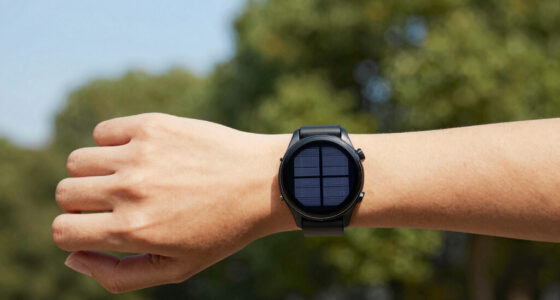
digital 24 hour watch for outdoor activities
As an affiliate, we earn on qualifying purchases.
As an affiliate, we earn on qualifying purchases.
Real-World Scenarios: Reading a 24-Hour Dial in Action
Imagine you’re on a night hike, checking your watch. The hour hand points to 22, and the minute hand points to 45. You instantly know it’s 22:45, or 10:45 PM. No need to convert or second-guess. This immediate clarity can be critical for safety, helping you decide whether to rest or continue, based on how long you’ve been out. In aviation, pilots rely heavily on this clarity when flying across time zones, as it allows them to synchronize schedules, coordinate with ground control, and plan fuel stops with precision—reducing the risk of timing errors that could compromise safety. For military personnel, accurate timekeeping in a 24-hour format ensures synchronized operations, avoiding misunderstandings that could lead to operational failures or friendly fire incidents. Recognizing the practical importance of this skill underscores its value in demanding environments where clarity and speed are vital.
Another example: a soldier in the field needs to synchronize with command. Seeing 4 on the dial tells them it’s 4 AM—an early start, no confusion about whether it’s morning or evening. This straightforward understanding can influence decisions about when to move, rest, or execute specific tasks, directly impacting mission success and safety.
Frequently Asked Questions
How do I quickly convert a 24-hour time to 12-hour format?
To convert, subtract 12 from any hour over 12. For example, 14:00 becomes 2:00 PM. For hours 0-11, it’s the same in 12-hour format, with AM or PM added accordingly.Can I use a 24-hour watch for everyday tasks?
Absolutely. Many outdoor and military personnel rely on 24-hour watches daily. It reduces errors, especially in situations where distinguishing day from night matters.How do I set a 24-hour watch correctly?
Follow the manufacturer’s instructions. Typically, you set the hour hand to the current 24-hour time, then adjust the minute and second hands. Practice setting it at noon or midnight to verify accuracy.Are 24-hour watches more accurate than 12-hour ones?
Not inherently. Accuracy depends on the movement quality. However, the 24-hour scale offers better clarity, reducing mistakes in reading the time — especially in professional contexts.What’s the best way to memorize the 24-hour scale?
Visualize or write out the scale from 0 to 23. Use daily practice—check your watch at different times and mentally note the corresponding 24-hour number. Over time, it becomes second nature.Conclusion
Mastering the 24-hour dial transforms your watch into a tool for precision, not guesswork. It’s a simple skill that pays off in critical moments—whether you’re navigating the outdoors, coordinating in the military, or flying across time zones. The next time you glance at your watch, see beyond the numbers—see the clarity and confidence it offers.
Remember, it’s not just about reading the time. It’s about trusting your gear to keep you sharp—every hour of the day.
Fall Picks
fall essentials
As an affiliate, we earn on qualifying purchases.