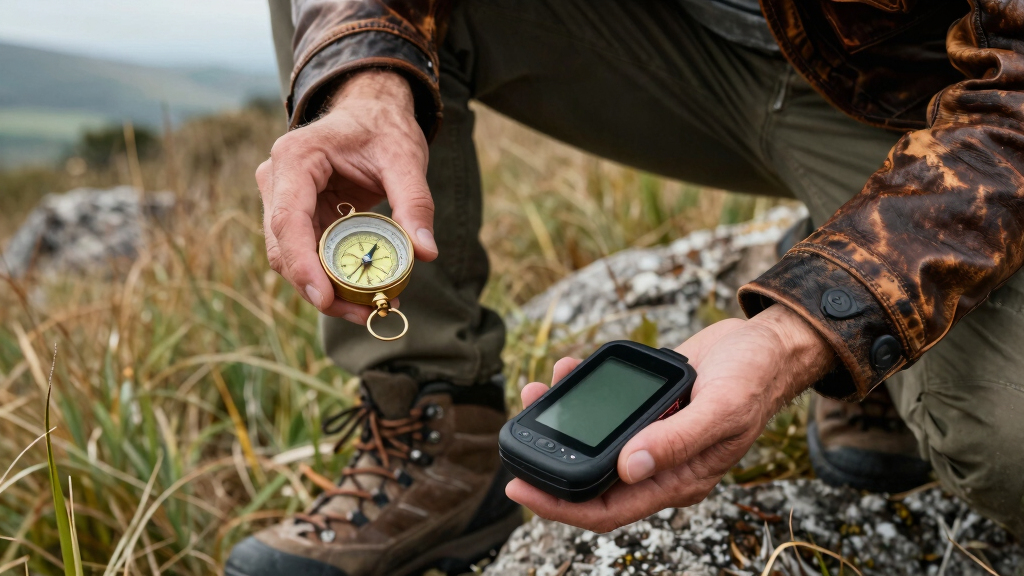

TL;DR

Get your wardrobe favorites delivered free with Prime
- Fast, free delivery on millions of items
- Prime Video, Amazon Music and more included
- Member-only deals all year
Digital tools offer precision and data management, but analog instruments excel in durability and simplicity. The right choice depends on your environment and needs.
In rough conditions, analog tools often outperform digital because of their inherent durability and simplicity.
Digital devices excel in environments where high precision and data management are crucial, like environmental monitoring or medical fields.
Recent tech improvements have made digital tools more rugged, but they still depend on batteries and electronics.
Budget and operational context should guide your choice—analog for straightforward durability, digital for feature-rich performance.
Hybrid tools combining analog and digital features are increasingly common, offering balanced benefits.
Analog vs Digital for Field Use
Digital instruments bring exact readings, connected data and consolidated features. Analog tools answer with instant readability, mechanical resilience and almost no operational overhead. The better tool is the one matched to the mission—not the trend.
What changes in the field?
Precision is only one kind of performance. A useful comparison also accounts for speed, cognitive load, environmental exposure, power access and whether measurements must be stored or shared.
Exact number or visible trend?
Digital reduces interpretation error with a precise numerical display. Analog makes direction and rate of change visible at a glance—often faster when seconds matter.
Mechanical confidence
Fewer electronic components give analog tools an inherent edge around mud, impact and prolonged storage. Rugged digital casings narrow that advantage, but cannot remove power dependence.
Read now or analyze later?
Analog readings usually require handwritten records. Digital tools can log, transfer and analyze measurements—critical for monitoring, medicine and long-duration missions.
Glance beats navigation
A needle, dial or marked scale communicates immediately, including while wearing gloves. A digital device can be equally fast once configured, but menus and modes add friction.
Upfront versus lifecycle
Analog is generally cheaper to acquire and maintain. Digital costs more, yet GPS, alarms, connectivity and logging can replace several separate tools and manual processes.
Every feature has a fuel bill
Mechanical tools may need no battery at all. Digital readiness requires charge planning, spare cells and a fallback for cold, remote or extended operations.
The honest scorecard
No universal winner emerges. Digital leads wherever exact measurement and information management define success; analog leads wherever immediate comprehension and minimal failure modes matter most.
| Field criterion | Analog | Digital | Operational reading |
|---|---|---|---|
| Numerical precision | ~ Scale interpretation | ✓ Exact display | Digital reduces reading ambiguity. |
| Rapid glance reading | ✓ Excellent | ~ Interface dependent | Needles reveal position and trend quickly. |
| Impact, mud and dust | ✓ Inherently robust | ~ Strong when ruggedized | Check enclosure and impact ratings. |
| Power independence | ✓ High | ✗ Battery dependent | Charging logistics become mission logistics. |
| Automatic data logging | ✗ Manual only | ✓ Native capability | Digital removes transcription steps. |
| Electronic interference | ✓ Low exposure | ~ Model dependent | Calibration and shielding may matter. |
| Multi-function capability | ~ Usually specialized | ✓ Highly integrated | One device can replace several instruments. |
| Upfront cost | ✓ Usually lower | ~ Usually higher | Assess value across the full workflow. |
Different strengths, different missions
These qualitative five-point profiles summarize the relative tendencies described in the comparison. They are decision aids, not laboratory test results; specific models can perform above or below their category.
Analog field profile
Optimized for immediate use, low support burden and mechanical resilience.
Digital field profile
Optimized for exact readings, integrated functions and information workflows.
Where each approach gains value
Choose from the mission outward
Start with conditions and consequences before comparing feature lists. This five-step chain prevents impressive specifications from obscuring a basic operational mismatch.
Read the environment
Impact, water, dust, cold, interference and available shelter.
Define precision
Decide whether you need an exact value, a visible trend or both.
Test the operator
Consider gloves, stress, training, visibility and cognitive load.
Plan support
Count battery, calibration, maintenance and compatibility needs.
Select the system
Choose analog, digital or a hybrid with deliberate redundancy.
Carry analog for certainty. Carry digital for capability.
When failure is unacceptable, the strongest answer may be layered rather than binary: a rugged digital primary for precision and records, backed by a simple analog instrument that remains readable without software, connectivity or charge.
Choose analog when…
Simplicity dominates: the environment is punishing, power is scarce, readings must be immediate and manual recording is acceptable.
Choose digital when…
Information dominates: exact values, alarms, GPS, connectivity, trend analysis or automatic records directly improve the mission.
Choose hybrid when…
Continuity dominates: you need a familiar visual display alongside logging, transmission or a redundant digital workflow.
Five truths to carry forward
Rough conditions still favor simplicity. Analog tools remove batteries, menus and many electronic failure points from the equation.
Precision changes the digital case. Environmental monitoring, medicine and technical measurement benefit from exact values and lower transcription risk.
Rugged digital is genuinely rugged. Waterproofing, shock protection and dustproof enclosures have narrowed—but not erased—the reliability gap.
Cost must include readiness. Acquisition price, batteries, charging, calibration, training and time spent recording data all belong in the calculation.
The future is increasingly hybrid. Analog readability paired with digital logging offers a balanced route for teams that need both resilience and data.
Which Is More Accurate and Precise in the Field?
Digital instruments typically deliver higher accuracy because they display exact numbers, reducing guesswork. For example, a digital compass can show precise bearings to the degree, while an analog compass relies on the user’s ability to interpret the dial, which can introduce small errors.
But in fast-paced situations, analog gauges often provide quicker assessments. Imagine a medic checking vital signs; a quick glance at a needle is faster than reading a digital number, especially with gloves or adrenaline rushing.
Understanding these differences is crucial because accuracy impacts decision-making. Digital tools, with their precise readings, reduce the chance of misinterpretation, which can be critical in environments where small errors lead to significant consequences. However, the tradeoff is that digital devices may require calibration and can be susceptible to electronic interference, potentially compromising their reliability in certain scenarios. Conversely, analog gauges, while slightly less precise, excel in providing rapid, glance-based assessments without the need for power or calibration, making them invaluable in situations where immediate action is needed and simplicity is key.
As an affiliate, we earn on qualifying purchases.
Durability: Which Can Take a Beating?
In harsh environments, analog tools are often more dependable. Think of a military field watch bouncing around in a muddy truck or a firefighter’s rugged analog meter surviving a splash of water. They’re inherently simple, with fewer electronic parts to fail.
Modern digital devices have made huge strides. Ruggedized models now feature waterproofing, shock resistance, and dustproof casings. For example, some digital compasses are rated IP68, meaning they can handle immersion and dust. But they still rely on batteries, which can fail or drain at the worst moment.
Choosing between analog and digital in extreme conditions involves weighing the importance of electronic vulnerability versus mechanical robustness. Analog devices, with their simple mechanical design, are less likely to fail due to moisture, impact, or dust. Digital devices, while increasingly rugged, still depend on electronic components and power sources, which can be critical points of failure. The tradeoff is that digital tools often offer more features, but at the expense of increased fragility. Therefore, in scenarios with constant impacts, mud, or water, analog tools tend to be more reliable because their design inherently resists environmental stressors, ensuring your measurement tools keep working when you need them most.
As an affiliate, we earn on qualifying purchases.
Ease of Use: Which Gets the Job Done Faster?
When speed counts, analog tools often win. A quick glance at a dial or needle provides immediate data—no buttons, no menus. For example, a pilot using an analog altimeter instantly gauges altitude without fiddling with settings.
Digital devices, however, can be more complex but also more feature-rich. Some have touchscreens, data logging, and alarms. If you need multiple functions—say, a digital multi-tool with GPS, barometer, and compass—digital might save you time by consolidating tools.
Understanding the implications of ease of use is about more than just speed. It’s about reducing cognitive load and minimizing errors in stressful situations. Analog tools, with their straightforward interfaces, allow operators to focus on their environment rather than navigating complex menus. Digital devices, while offering more capabilities, require familiarity to operate efficiently, which can introduce delays or errors if not properly trained. The tradeoff is that digital tools, once mastered, can streamline workflows by integrating multiple functions into a single device, reducing the need to carry and switch between multiple instruments. Ultimately, the choice hinges on the user’s familiarity and the operational context: simplicity favors analog, but advanced features can make digital indispensable for complex or data-intensive tasks.
As an affiliate, we earn on qualifying purchases.
Data Recording and Analysis: Which One Keeps Track?
Digital instruments shine when it comes to data. Imagine a med tech recording vital signs over hours or days—digital devices can automatically store, transfer, and analyze this info. It’s a huge time-saver and reduces manual errors.
Analog tools lack this capability. You need to jot down readings manually, which can be cumbersome and error-prone, especially in stressful conditions. For example, a manual pressure gauge requires you to note the value before it changes or leaks.
Understanding this distinction is vital because the ability to record, analyze, and share data can influence operational success. Digital tools facilitate quick data collection, trend analysis, and remote monitoring, which are essential in complex or prolonged missions. However, reliance on electronic storage introduces risks like data corruption, device failure, or incompatibility with other systems. Analog tools, though limited in recording capacity, excel in environments where simplicity and immediate feedback are critical, and where data might need to be recorded manually due to technological constraints. The tradeoff involves balancing the convenience and accuracy of digital data management against the robustness and simplicity of analog methods, which are less prone to electronic failure but require manual effort.
shockproof analog measuring instrument
As an affiliate, we earn on qualifying purchases.
As an affiliate, we earn on qualifying purchases.
Cost and Power: Which Is Cheaper and Longer-Lasting?
In general, analog tools cost less upfront. A simple mechanical watch or compass might be a fraction of a digital device’s price. They also don’t need batteries or only require basic ones.
Digital devices can be more expensive but often include extra features that justify the price—like GPS, data logging, or connectivity. Plus, they depend on batteries, which means you’ll need to carry spares or recharge them.
Considering long-term costs and operational readiness is crucial. Analog tools, with their minimal maintenance and long-lasting power sources, often prove more cost-effective over extended deployments. Digital tools, while pricier initially, can offer significant advantages in functionality, but their reliance on batteries and electronic components means ongoing expenses and potential points of failure. For example, a basic analog watch can run for years on a single battery or mechanical winding, whereas a digital device might need frequent recharging or battery replacements, which can be impractical in remote settings. Therefore, evaluating operational duration, maintenance capabilities, and budget constraints helps determine the most suitable choice for your environment and mission profile.
Recent Tech: How Are Modern Devices Changing the Game?
Both analog and digital tools have evolved. Ruggedized digital instruments now feature waterproofing, shock resistance, and long-lasting batteries. Some combine digital screens with analog readouts, blending the best of both worlds.
Wireless tech, like Bluetooth, lets digital devices send data to your phone or tablet instantly. Imagine a firefighter monitoring air quality with a digital sensor that transmits real-time info to a central unit—saving precious seconds.
These advancements mean digital tools are catching up in durability and ease of use, but often at a higher cost.
Which Should You Pick? The Final Breakdown
| Feature | Analog | Digital |
|---|---|---|
| Accuracy | Good for quick estimates | High precision, exact numbers |
| Durability | More inherently rugged | Rugged models available, but more sensitive |
| Ease of Use | Simple, intuitive | Feature-rich, requires familiarity |
| Data Storage | Manual recording only | Automatic, digital transfer |
| Cost | Lower initial investment | Higher, but more features |
| Power | Mechanical or simple batteries | Batteries or recharging needed |
Choosing depends on your environment, measurement needs, and budget. If you’re in the mud and rain, analog’s simplicity wins. Need detailed logs and analysis? Digital’s your friend.
Frequently Asked Questions
Which is more accurate for quick measurements?
Digital devices usually provide more precise readings, but analog gauges can be faster for a quick glance—especially in high-pressure situations.Are digital tools reliable in extreme weather?
Modern ruggedized digital tools are designed for tough conditions, but analog tools still lead in extreme environments due to their simplicity and fewer electronic parts.Should I always choose digital for data recording?
If data logging and analysis are critical, digital tools offer significant advantages. For simple, reliable measurements, analog might be enough.How do battery life and power affect my choice?
Analog instruments often last years without battery changes, while digital devices need careful power management and spares during extended missions.Can hybrid tools give me the best of both worlds?
Yes. Hybrid instruments combine analog durability with digital data capabilities, making them versatile for many field scenarios.Conclusion
When choosing your field gear, think about what truly matters: durability, precision, or data. Both analog and digital tools have their place—your mission, environment, and budget decide which wins. Remember, the best gear is the one you trust to perform when it counts.Halloween Picks
halloween
As an affiliate, we earn on qualifying purchases.