
TL;DR

Get your wardrobe favorites delivered free — and shop member deals
- Fast, free delivery on millions of items
- Access to Prime Big Deal Days deals on October 6–7
- Prime Video, Amazon Music and more included
GMT watches are designed to display two or more time zones at once, making them ideal for travelers and professionals. They feature an extra 24-hour hand and rotating bezels, with recent innovations improving precision and durability. Knowing how to read and set a GMT watch helps you stay connected across different regions with ease.
A GMT watch displays two time zones simultaneously, typically via a 24-hour hand and rotating bezel.
Choosing between a fixed 24-hour hand with a bezel or separate sub-dials depends on your travel habits and precision needs.
Recent innovations include scratch-resistant ceramics, lightweight materials, and quick-set mechanisms for easier adjustments.
Mechanical GMTs offer longevity and craftsmanship, while quartz models provide affordability and accuracy.
Understanding how to set your GMT watch correctly ensures you stay perfectly synchronized across time zones.
What is a GMT Watch and Why It Matters
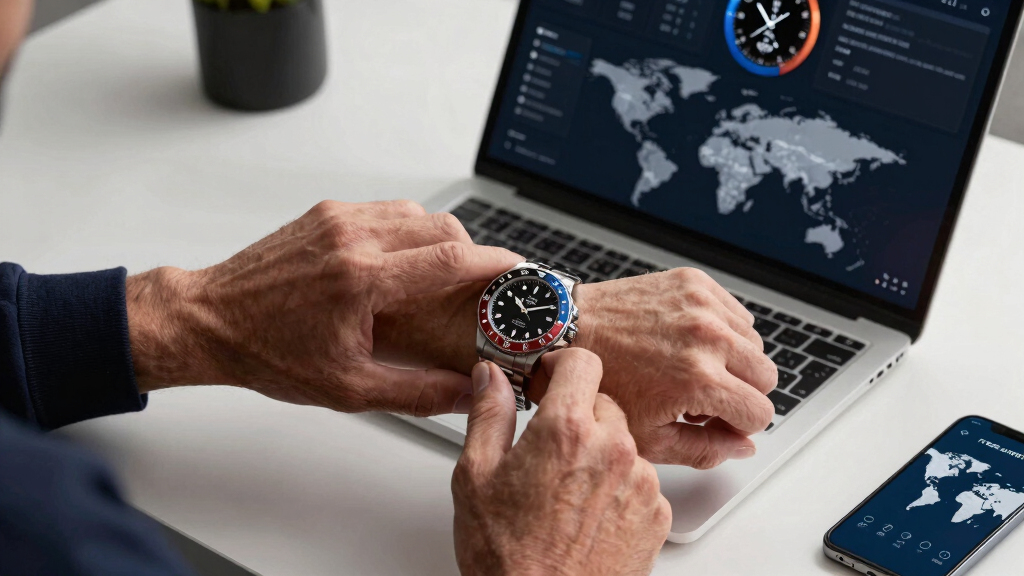
A GMT watch is a timepiece designed to display two time zones at once. It features an extra hand — the 24-hour hand — that points to a second time zone on either a fixed or rotating bezel. This makes it perfect for travelers, pilots, or anyone who needs to juggle different clocks daily.
Understanding why this matters goes beyond just reading two clocks. For example, a nurse coordinating with international teams needs to keep track of multiple schedules to avoid missed meetings or miscommunications. For business travelers, managing time zones efficiently can mean the difference between catching a flight or missing an appointment. The core benefit is that GMT watches provide quick, reliable access to multiple times without the hassle of multiple devices or complicated conversions. They simplify complex schedules into a single glance, reducing cognitive load and helping you make timely decisions across borders.
Furthermore, the importance of understanding and using a GMT watch effectively lies in its ability to reduce errors and improve coordination. When you’re managing international meetings or flights, a small mistake in reading the time can lead to missed opportunities or costly delays. A GMT watch’s design encourages quick comprehension, allowing you to stay ahead of your schedule. This is why mastering its features and settings can significantly enhance your efficiency and confidence, especially in high-stakes environments.
As an affiliate, we earn on qualifying purchases.
How a GMT Watch Keeps Two Times at Once
Here’s how it works: the extra 24-hour hand makes one full rotation every 24 hours, pointing to the second time zone on a 24-hour scale. You set this hand independently from the main hour hand, which shows your local time. The rotating bezel, often marked with 24-hour increments, can be turned to align with the second zone’s time difference, effectively adding a third time zone to your view. This combination allows for a layered understanding of time across multiple regions.
For instance, a pilot flying from New York to London can set the main hands to New York time and adjust the 24-hour hand to London time. When she lands, she can instantly see both times at a glance, aiding in scheduling, communication, and planning. This mechanism transforms a complex task—tracking multiple zones—into an intuitive visual reference, reducing errors and enhancing situational awareness. The ability to quickly adapt to different zones can be a life-saver in fast-paced scenarios, and understanding this mechanism helps users leverage it fully.
The tradeoff here involves complexity versus convenience. While the additional features allow for precise tracking of multiple zones, they also require more careful setting and understanding of how the mechanisms interact. For example, some watches require manual adjustment of the 24-hour hand when crossing time zones, which can be a source of error if not done correctly. On the other hand, simpler models with fixed bezels and single 24-hour hand may be easier for casual users but less versatile for frequent travelers who need real-time adjustments. Recognizing these tradeoffs helps you select a GMT watch that aligns with your travel frequency, technical comfort, and accuracy needs, ensuring it enhances your daily routine rather than complicating it.
As an affiliate, we earn on qualifying purchases.
The Two Main Types of GMT Watches — Which Fits You?
| Type | Features | Best For |
|---|---|---|
| Travel GMT | Fixed 24-hour hand + rotating bezel, simple to set and read | Frequent travelers, pilots, explorers who need quick adjustments and straightforward displays |
| Dual Timezone Watch | Separate sub-dials or independent hour hands, often more complex but highly customizable | Business travelers, globetrotters who need to monitor multiple zones with precision |
Choosing between these types depends on your specific needs. A Travel GMT with a fixed 24-hour hand and rotating bezel offers quick, intuitive adjustments suitable for changing time zones on the fly. Conversely, dual timezone watches with separate dials or multiple adjustable hands provide more detailed control, ideal for those who need to track several zones with accuracy and clarity. Understanding these tradeoffs helps you select a watch that aligns with your travel frequency, work demands, and comfort with complexity. For example, if you frequently switch between zones, a simple Travel GMT may serve you best; if your work involves managing multiple international schedules, a dual timezone model might be more appropriate.
Additionally, consider the implications of each type. A Travel GMT’s simplicity means less time spent adjusting and less chance of misreading, but it may lack the granularity needed for precise scheduling across many zones. Dual timezone models, while more complex, offer greater flexibility but require more initial learning and maintenance. Your choice should reflect your comfort with these tradeoffs and your typical travel or work patterns, ensuring your watch complements your lifestyle rather than complicates it.
As an affiliate, we earn on qualifying purchases.
What’s New in GMT Watches? The Latest Innovations
Recent GMT watches have significantly advanced in durability, precision, and user convenience. Modern materials like ceramic bezels resist scratches and fading, ensuring longevity and maintaining aesthetic appeal. Lightweight titanium cases reduce fatigue during prolonged wear, making them more comfortable for everyday use. Luminous dials and hands improve legibility in low-light conditions, crucial for night-time or high-stakes environments.
Innovations in movement technology include quick-set mechanisms that allow you to adjust the second time zone independently without stopping the main movement—saving time and reducing the risk of missetting. Brands like Breitling and Seiko have incorporated these features into their latest models, making adjustments seamless even mid-flight or during busy schedules. Additionally, smartwatch hybrids now combine traditional mechanical movements with digital controls, offering multi-zone tracking via apps and digital displays, blending the best of both worlds. These innovations expand the practical value of GMT watches, making them more reliable, durable, and user-friendly than ever before.
These technological advancements matter because they directly impact usability, longevity, and the overall user experience. For example, scratch-resistant ceramics and lightweight cases mean your watch maintains its pristine appearance longer and feels more comfortable, encouraging daily wear. Quick-set mechanisms reduce the frustration of complex adjustments, especially in unpredictable environments like airports or busy workdays. The integration of digital features with traditional movements reflects a shift towards hybrid watches that combine the aesthetic appeal of mechanical watches with the convenience of smart technology. Overall, these innovations mean that GMT watches are no longer just tools for travelers but versatile, durable accessories suited for modern lifestyles, offering both reliability and style.
As an affiliate, we earn on qualifying purchases.
Setting and Using Your GMT Watch — Step-by-Step
- Set your main hour and minute hands to your local time, ensuring the watch displays your current location accurately.
- Adjust the 24-hour hand to your primary second timezone, using the crown or dedicated pusher, depending on your model.
- If your watch has a rotating bezel, turn it to align with the second time zone’s time difference, considering whether you need to add or subtract hours.
- Double-check the settings — verify that the 24-hour hand and bezel correctly reflect your second zone, and that the main hands show your local time.
- Use the bezel to track a third zone if needed, simply by rotating it to match the desired offset. Remember to reset it if your primary zone changes.
For example, if you’re in Tokyo and want to track New York and London, set the main hands to Tokyo, the 24-hour hand to New York, and rotate the bezel to align with London’s time difference. This layered approach allows quick, reliable access to multiple zones, reducing confusion and ensuring timely decisions. Practicing this setup initially can help you develop an intuitive rhythm, making multi-zone tracking second nature in everyday use.
It’s important to understand that mastering the setting process can greatly enhance your efficiency and confidence with your GMT watch. Properly setting your watch involves not just initial configuration but also understanding how to readjust as your travel plans or schedules change. For example, if you cross multiple time zones frequently, knowing how to quickly reset the 24-hour hand without disrupting the main time display saves valuable time and prevents errors. Developing a routine for setting your GMT watch ensures you can rely on it in critical moments, such as catching flights or coordinating international meetings, making it an indispensable tool rather than a cumbersome gadget.
Why a Mechanical GMT Might Be Better Than Quartz
Mechanical GMTs are highly valued for their craftsmanship, longevity, and the emotional connection they foster. Their intricate movements are assembled by skilled artisans, often requiring years of experience. When properly maintained, a mechanical GMT can last a lifetime, often becoming a cherished heirloom. This durability and craftsmanship translate into a sense of ownership and pride, which many enthusiasts seek in their timepieces.
Quartz GMTs, while offering superior precision and often lower cost, lack the same emotional appeal and tactile connection. They are more susceptible to battery changes and may not have the same aesthetic or collectible value. However, for everyday accuracy and convenience, they serve well, especially in demanding environments where durability and low maintenance are priorities.
Choosing a mechanical GMT over quartz is about weighing emotional value against practical convenience. If your priority is a durable, long-lasting piece that embodies craftsmanship and tradition, a mechanical GMT is the better choice. For those who prefer accuracy, ease of use, and cost-effectiveness, quartz models remain excellent options. Recognizing these tradeoffs helps you make a decision aligned with your values and lifestyle, ensuring your watch is both functional and meaningful.
Furthermore, mechanical GMTs often feature complex movements that showcase watchmaking artistry. This complexity not only enhances durability but also provides a tactile experience that many collectors cherish. The tradeoff is that mechanical watches generally require regular servicing and are more sensitive to shocks and environmental factors. Understanding these nuances allows you to select a watch that truly fits your lifestyle—whether you value the emotional connection and craftsmanship of a mechanical piece or the convenience and precision of quartz.
Key Features to Check When Buying a GMT Watch
- Movement type: Mechanical or quartz? Consider the importance of craftsmanship versus convenience and accuracy in your decision.
- Bezel design: Fixed or rotatable? Think about how often you’ll need to adjust or use the bezel to track additional zones.
- Material: Ceramic, titanium, stainless steel? Material impacts durability, weight, and aesthetics—choose based on your lifestyle and style preferences.
- Legibility: Luminous markers and clear dial? Ensure you can read the time easily in various lighting conditions, especially if traveling or working at night.
- Water resistance: Essential for divers and outdoor enthusiasts. Check the depth rating to match your activities.
For example, if you’re a diver, prioritize a GMT watch with at least 200m water resistance and a scratchproof ceramic bezel. If you’re a frequent traveler, focus on ease of setting, legibility, and durability. Evaluating these features in the context of your lifestyle helps you select a watch that not only functions well but also endures daily wear and environmental challenges.
Beyond these features, consider how the watch’s design aligns with your personal style and whether it offers the functionalities you need for your specific routines. Remember that investing in a quality GMT watch means balancing technical features with aesthetic appeal, ensuring your choice enhances both your professional and personal identity.
Frequently Asked Questions
How does a GMT watch work?
A GMT watch uses an extra 24-hour hand that can be set independently, showing a second time zone. The rotating bezel can also be turned to track a third zone, making it a versatile tool for travelers and professionals.Can I set the second time zone without stopping the main time on a mechanical GMT?
Yes. Many modern mechanical GMTs feature quick-set mechanisms that allow you to adjust the second time zone independently, without stopping or resetting the main hour hand. This flexibility is crucial for travelers who frequently change zones, as it minimizes disruption and preserves the accuracy of your primary time. Learning how to use these mechanisms effectively can save you time and prevent accidental missettings, ensuring your watch remains synchronized with your schedule.Are GMT watches suitable for everyday wear?
Absolutely. Many models are built for durability and water resistance, making them reliable companions whether you’re traveling or just want a watch that keeps multiple times at a glance. Selecting a model with robust materials and features aligned with your daily activities maximizes utility and longevity.What should I consider when choosing a GMT watch?
Focus on movement type, bezel design, material, legibility, and water resistance. Think about your primary use — whether for travel, diving, or daily wear — to pick the best fit. Evaluating these factors in relation to your lifestyle ensures you invest in a watch that enhances your routine and withstands environmental demands.How accurate are quartz GMT watches compared to mechanical ones?
Quartz GMTs generally offer higher accuracy, deviating only a few seconds per month, making them ideal for precise scheduling. Mechanical GMTs, while slightly less accurate, provide a tactile and aesthetic appeal valued by enthusiasts and collectors. Your choice depends on whether you prioritize precision or craftsmanship; understanding this tradeoff helps you select a watch that aligns with your expectations and lifestyle.Conclusion
A GMT watch is more than just a tool — it’s a bridge across time zones. Mastering its features turns complex schedules into simple, glanceable moments. Whether you’re flying, working, or just dreaming of distant places, a well-chosen GMT keeps you connected — no matter where you land.Fall Picks
fall essentials
As an affiliate, we earn on qualifying purchases.