
TL;DR

Get your wardrobe favorites delivered free with Prime
- Fast, free delivery on millions of items
- Prime Video, Amazon Music and more included
- Member-only deals all year
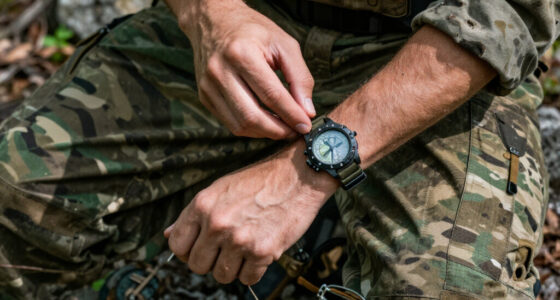
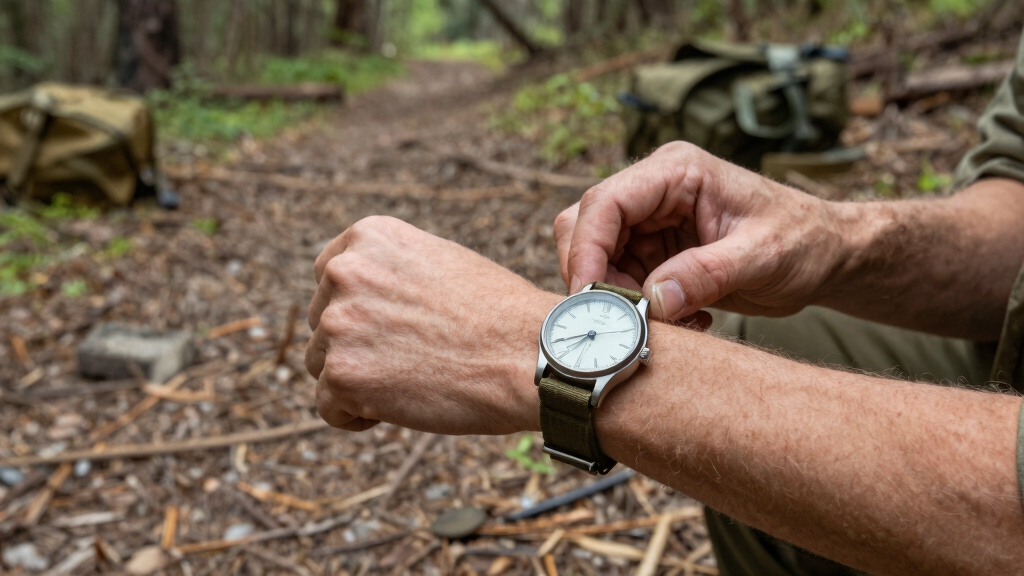
The A-11 was a groundbreaking WWII military watch praised for durability and precision. Its legacy endures through collectible models and modern homages, reflecting its vital role in wartime logistics.
When you think of a soldier’s wristwatch, images of rugged, reliable, no-nonsense tools come to mind. The A-11 stands out as one of the most iconic examples — a watch built to endure the chaos of war and keep soldiers synchronized in the chaos. Its story isn’t just about a piece of gear; it’s a chapter in military history, a symbol of resilience, and a blueprint for durability in watchmaking.
This isn’t just a vintage relic. The A-11’s influence stretches from wartime battlefields to modern collections. In this article, you’ll learn how this no-frills watch became a vital tool, how it was made, and why it still captures attention today. Get ready for a journey through time, toughness, and innovation.
The A-11 was the first standardized military watch, emphasizing durability, simplicity, and ease of production.
Authentic vintage models are highly collectible, especially those in original condition with original parts.
Modern homage watches capture the rugged spirit of the A-11 but benefit from contemporary materials and movements.
Identifying an authentic A-11 involves checking manufacturer markings, dial design, and case engravings.
The legacy of the A-11 shapes today’s military and outdoor watches, emphasizing toughness over flash.
The A-11 Story: The Field Watch That Went to War
The A-11 was a groundbreaking WWII military watch praised for durability and precision. Built for mud, darkness, shock, and mass issue, it turned timekeeping into battlefield logistics and set the template for rugged military watches still admired today.
One of the first standardized military watches issued at scale.
Bulova, Elgin, Waltham, Hamilton, and Gruen built variants.
Simple manual calibers made field repair and maintenance practical.
Collectors and modern homages keep its tool-watch DNA alive.
A watch designed for seconds that mattered.
The A-11 prioritized the battlefield essentials: readability, toughness, repeatable manufacturing, and repairs simple enough to support wartime logistics.
Black dial, bright numerals
Large luminous numerals and hands let soldiers read the time quickly in low light, from dawn foxholes to night movement.
Built for hostile conditions
The case and movement were expected to cope with shock, dirt, moisture, vibration, and the daily abuse of combat gear.
Mass issue, not boutique craft
Strict specifications allowed multiple manufacturers to produce reliable watches quickly without losing the essential standard.
Repairable in the field
Manual-wind movements such as the Hamilton 987S family were robust, familiar, and easier to maintain than delicate luxury mechanisms.
Time became logistics
Artillery timing, navigation, troop movement, and radio coordination depended on shared minutes and trusted seconds.
The blueprint endured
Modern military and outdoor watches still borrow the A-11 lesson: clarity and toughness beat ornament when conditions turn harsh.
How the A-11 turned precision into battlefield rhythm.
It was not one brand’s hero product. It was a military standard, executed by American makers with small variations but one shared mission: keep units synchronized.
Specification
The Army defined a simple, legible, durable watch that could be produced affordably at scale.
Manufacture
Bulova, Elgin, Waltham, Hamilton, and Gruen delivered variants under the same practical brief.
Issue
Soldiers received a wrist instrument suited to mud, movement, darkness, and operational pressure.
Synchronization
Shared timing supported attacks, navigation, artillery windows, patrol movement, and unit safety.
The combat value was practical, not romantic.
In a night raid or coordinated advance, a clear dial and dependable movement reduced uncertainty. The A-11 became an anchor in darkness because soldiers could trust it at a glance.
Authenticity is where value and history meet.
Real A-11 examples are judged by maker marks, dial layout, case engravings, movement details, originality, and whether later restoration has blurred the historical evidence.
| Criterion | Authentic Wartime A-11 | Restored Vintage | Modern Homage |
|---|---|---|---|
| Military specification identity | ✓ Strong | ~ Depends on parts | ✗ Inspired only |
| Original dial, hands, and case | ✓ Highest value | ~ Often mixed | ✗ New production |
| Daily-wear water resistance | ✗ Limited | ~ Case dependent | ✓ Improved |
| Field-service simplicity | ✓ Core design | ~ Watchmaker advised | ✓ Modern support |
| Historical provenance | ✓ Central appeal | ~ Must verify | ✗ No wartime record |
| Rugged A-11 aesthetic | ✓ Original source | ✓ Preserved style | ✓ Contemporary tribute |
Design priorities baked into the A-11 brief
How to spot a real A-11
- Look for manufacturer names such as Bulova, Elgin, Waltham, Hamilton, or Gruen.
- Check the clean black dial, luminous numerals, and no-nonsense hand layout.
- Inspect military case engravings, serial references, and movement markings.
- Confirm originality before paying collector prices for a heavily restored watch.
- Use expert references when condition and parts history are unclear.
From wartime tool to modern design language.
The A-11 endures because its formula is still relevant: make the watch legible, tough, repairable, and useful before making it decorative.
Army need
Reliable timekeeping for coordination under pressure.
Factory scale
Multiple makers produced variations on one shared standard.
Field use
Soldiers used the watch for navigation, movement, and timing.
Collector proof
Original parts and markings preserve the historical record.
Modern homage
Today’s rugged watches still borrow the A-11’s restraint.
The A-11 made standardization a military advantage, not just a procurement detail.
Collectors prize authenticity because every original marking carries wartime context.
Modern field watches still chase the same balance: toughness over flash.
What Made the A-11 a Game-Changer in Military Watches?
The A-11’s design prioritized function over form, which is exactly what soldiers needed. It featured a sturdy 32mm stainless steel case, easy-to-read black dial with luminous numerals, and a reliable manual-wind movement. The watch had to work in low light, cope with shocks, and resist dirt and water — often in extreme conditions.
Imagine a soldier in a muddy foxhole at dawn, glancing at their wrist for a quick coordinate check. The luminous numerals and simple layout let them read the time instantly, without fumbling or confusion. This clarity was built into the A-11’s DNA. Its standardized production meant units across the Army could synchronize operations, from artillery timing to troop movements.
Why does this matter? Because in wartime, every second counts, and a reliable, quickly readable watch can mean the difference between success and failure. The focus on simplicity and durability meant that soldiers could depend on their watches in the most demanding environments, reducing the risk of failure due to complex mechanisms or fragile parts. This emphasis on core functionality over ornate design set a standard that future military watches would follow, emphasizing the importance of reliability in life-and-death situations.
As an affiliate, we earn on qualifying purchases.
How the A-11 Was Made and Who Built It
The A-11 wasn’t just one brand but a standard issued to many, including Bulova, Elgin, Waltham, Hamilton, and Gruen. Each manufacturer produced their version, often with slight variations in dial design, case markings, and movements, but all adhered to strict military specifications.
These watches were designed for mass production — a necessity during wartime when millions of soldiers needed reliable, affordable gear fast. The movements, like Hamilton’s 987S, were simple, robust, and easy to repair in the field, ensuring soldiers always had accurate time.
Why is this significant? Because uniformity in design and manufacturing meant that repairs could be standardized, parts could be interchangeable, and training soldiers to service these watches became more straightforward. This approach minimized downtime and logistical complexity, which was crucial during wartime. Furthermore, the ability to produce these watches at scale without sacrificing essential quality meant that the military could equip vast numbers of troops quickly, a logistical achievement that was critical to operational success. It also established a model of industrial efficiency that would influence military manufacturing for decades.
modern homage military field watch
As an affiliate, we earn on qualifying purchases.
As an affiliate, we earn on qualifying purchases.
The A-11’s Role During World War II
During WWII, the A-11 served as a crucial piece of equipment for soldiers. Accurate timing meant synchronized attacks, navigation, and coordination — all vital in the chaos of combat. A soldier in Europe or the Pacific relied on their watch to stay aligned with battalion movements or artillery fire.
Imagine a night raid where seconds matter. The soldier’s A-11, with its luminous dial, becomes an anchor in darkness, helping them keep pace with their unit. It wasn’t just a watch; it was a lifeline that kept the chaos in check.
Why did this matter? Because in combat, miscommunication or timing errors could lead to disastrous outcomes. The A-11’s reliability and readability reduced these risks significantly. Its durability meant it could withstand the rigors of combat, from shocks and vibrations to exposure to dirt and water. The watch’s role extended beyond keeping time; it became a trusted tool that contributed directly to operational success and safety. This practical application underscores why military watches like the A-11 are more than just accessories—they are essential gear that can influence the outcome of tactical operations.
As an affiliate, we earn on qualifying purchases.
The Legacy of the A-11 in Modern Watchmaking
The A-11’s influence extends far beyond WWII. Its durable, standardized design set a blueprint for military watches in the decades that followed. Today, collectors prize authentic vintage models, and several brands produce homage pieces inspired by its rugged style.
In recent years, the A-11 has appeared in museums, documentaries, and books, solidifying its place in horological history. Its simple, functional aesthetic resonates with modern outdoor and military watch enthusiasts who value toughness over flash.
Why does this matter? Because the principles embedded in the A-11—ease of readability, robustness, and mass producibility—are still highly relevant. They influence contemporary tactical watches designed for outdoor adventurers, first responders, and military personnel. The enduring appeal of the A-11 lies in its perfect balance between form and function, demonstrating that a watch’s primary purpose is to serve the wearer reliably in challenging conditions. Its legacy underscores a fundamental lesson: that durability, simplicity, and practicality are timeless virtues in watch design, inspiring new generations of rugged timepieces.
As an affiliate, we earn on qualifying purchases.
How to Spot a Real A-11 (and Why It Matters)
Authentic A-11s are distinguished by manufacturer markings, dial design, and case markings. Look for the brand name, like Bulova or Elgin, and specific serial numbers. The dial should be simple, with luminous numerals and hands, and the case should have military-specific engravings.
For collectors, authenticity isn’t just about value—it’s about preserving history. Fake or heavily refurbished watches can distort the story and diminish the integrity of the piece. Recognizing genuine A-11s ensures that you’re appreciating an authentic artifact that exemplifies wartime ingenuity and craftsmanship. It also guarantees that your investment retains its worth over time.
Pro tip: If you find an A-11 in good condition with original parts, it’s likely a rare find. Consulting a watch expert or referencing online collector forums can help you verify authenticity, but understanding key identifiers—such as specific manufacturer marks, dial features, and case details—is essential for any serious collector.
Modern Homages and Why They Still Matter
Several brands produce modern versions inspired by the A-11’s rugged aesthetic. These watches often feature updated materials, improved movements, and modern touches while maintaining the original’s tough appearance.
Why do these matter? Because they serve as a tangible link to the resilience and practicality of wartime engineering. For users today—outdoor enthusiasts, first responders, or military personnel—these homages offer a reliable, durable option rooted in proven design principles. They demonstrate that the core values of simplicity, toughness, and readability are still essential in a world filled with complex, often fragile, gadgets. Moreover, they provide a sense of continuity, honoring the legacy of a watch that proved its worth in the most demanding conditions and inspiring modern innovations that prioritize function over form.
Frequently Asked Questions
How can I tell if an A-11 is authentic?
Look for manufacturer markings like Bulova or Elgin, check the dial for luminous numerals, and examine case engravings. Authentic models will also have serial numbers and specific case shapes matching wartime specs. Consulting a knowledgeable collector or expert helps verify authenticity.
Are vintage A-11 watches valuable today?
Yes, especially those in good condition with original parts. Authentic vintage A-11s can fetch high prices at auctions, driven by their rarity and historical significance. Condition and provenance are key factors.
What’s the main difference between an A-11 and other military watches?
The A-11 was the first to be standardized across multiple manufacturers, emphasizing mass production, durability, and easy readability. Its design set a precedent, making it distinct from earlier, less uniform military timepieces.
Can I find modern watches inspired by the A-11?
Absolutely. Several brands produce homage models, blending the original’s rugged aesthetic with modern materials and movements. They’re popular among outdoor enthusiasts and collectors seeking a durable, vintage-inspired watch.
Conclusion
The A-11 isn’t just a relic; it’s a blueprint for rugged, reliable timepieces built for real-world challenges. Its story reminds us that sometimes, the simplest tools are the most enduring. When you look at a modern tactical watch, remember the soldier’s wrist in WWII — steady, tough, ready.
Next time you see a vintage A-11 or a modern homage, picture those soldiers, battling in mud and chaos, their watch ticking on. That’s more than history — it’s a testament to resilience in every second.
Halloween Picks
halloween
As an affiliate, we earn on qualifying purchases.