
TL;DR

Get your wardrobe favorites delivered free with Prime
- Fast, free delivery on millions of items
- Prime Video, Amazon Music and more included
- Member-only deals all year
This guide explains how to convert 12-hour time to 24-hour military time with a simple chart. It covers common conversions, tips, and real-world scenarios to boost your confidence in reading and using military time daily.
Switching between 12-hour and 24-hour clocks can feel like decoding a secret language, especially when every second counts. Whether you’re a first responder, a healthcare worker, or just trying to decode a military schedule, understanding this conversion is essential. It’s not about memorizing endless numbers but about grasping a simple rule that makes your life easier.
This article breaks down the process, shares a handy chart, and offers real-world examples. By the end, you’ll convert times like a pro—no confusion, no guesswork.
Master the simple rule: add 12 to PM hours after noon (except 12 PM).
Use visual tools like comparison charts and digital clocks to reinforce learning.
Remember the exceptions: 0000 for midnight, 1200 for noon.
Practice daily with real-world examples to build confidence.
Understanding military time prevents costly mistakes in critical situations.
How to Convert 12-Hour Time to Military Time in 3 Easy Steps
Converting 12-hour time to military time is straightforward once you know the key rules. Here’s a quick step-by-step:
- Identify if the time is AM or PM.
- If it’s AM and before 12:00, keep the hour as is, adding a leading zero if needed (e.g., 7:00 AM becomes 0700). Recognizing whether it’s AM or PM is crucial because it determines whether you add 12 or not, directly affecting the accuracy of your conversion.
- If it’s PM and after 12:00, add 12 to the hour (e.g., 3:15 PM becomes 1515). This step ensures that the afternoon and evening hours are correctly represented in a 24-hour format, which is vital for scheduling and coordination in professional settings.
For 12:00 AM, write 0000. For 12:00 PM, write 1200. These are the exceptions that mark the start and midday, respectively. Understanding these exceptions prevents common errors, such as confusing midnight with noon, which could lead to scheduling mishaps or miscommunications.
Picture yourself checking your phone at 2:30 PM. Simply add 12 to 2, making it 14.30 — or 1430 in military time. Easy, right? Recognizing these patterns simplifies real-world conversions, making your communication clearer and reducing mistakes.
As an affiliate, we earn on qualifying purchases.
Comparison Table: 12-Hour vs. 24-Hour Time
| 12-Hour (AM/PM) | 24-Hour (Military) |
|---|---|
| 12:00 AM | 0000 hours |
| 1:00 AM | 0100 hours |
| 7:45 AM | 0745 hours |
| 12:00 PM | 1200 hours |
| 3:15 PM | 1515 hours |
| 11:59 PM | 2359 hours |
This table makes it clear: hours before noon stay the same, with a leading zero if needed. Afternoon times are simply 12 added to the hour, shifting the clock into a 24-hour format. Recognizing these differences is crucial in contexts where precise timing prevents errors, such as in aviation, military operations, or healthcare. The simple visual comparison helps avoid confusion, especially for those new to military time, by showing how each format relates to the other and highlighting the importance of understanding the conversion logic in real-world applications.
As an affiliate, we earn on qualifying purchases.
Common Mistakes That Trip Up People Converting Time
Even experienced folks slip up if they forget a key rule. Here are common pitfalls and why they matter:
- Confusing 1200 hours (noon) with 2400 hours (midnight). This mistake can lead to scheduling errors that might cause missed appointments or delivery delays, especially in international or critical operations where precision is vital. Recognizing that 2400 is used to mark the very end of a day, rather than a different time, helps prevent these critical errors that could disrupt workflows or safety protocols.
- Adding 12 to AM hours accidentally, especially 12:00 AM which is 0000, not 1200. This error can cause misunderstandings about the actual time, leading to early or late arrivals in professional settings. Understanding that 12:00 AM is midnight, not noon, is essential to avoid miscommunications that can impact patient care, security, or operational timing.
- Forgetting the leading zero in times before 10:00, like writing 930 instead of 0930. Such omissions might seem minor but can cause confusion in structured schedules or logs. Uniform formatting ensures clarity and helps prevent misreading times, especially in environments where precision timing is critical, like air traffic control or emergency dispatch.
- Misreading 1300 as 1:00 AM instead of 1:00 PM. This mistake can lead to initiating processes or communication at the wrong time, impacting safety and coordination. Recognizing that times from 1300 onwards are in the afternoon or evening is vital for maintaining operational accuracy and safety in high-pressure situations.
Imagine a nurse reading a schedule that says 2300 hours. If they forget to subtract 1200, they might think it’s 11 AM instead of 11 PM. Small mistakes like this can cause significant issues in environments where timing impacts patient safety, medication administration, or emergency response. Being aware of these common errors and understanding their consequences helps ensure accuracy, reducing risks and enhancing safety in critical settings.
As an affiliate, we earn on qualifying purchases.
Real-World Scenarios: When and Why You’ll Use Military Time
Military time isn’t just for soldiers. It’s about clarity in critical moments. For example, an emergency room nurse notes a patient’s medication at 2230 hours — 10:30 PM. Confusing that with 1030 (10:30 AM) could be dangerous, especially when timing medication or procedures is critical for patient safety. Using the 24-hour format eliminates ambiguity, ensuring everyone involved understands the exact timing, which can be the difference between timely care and mistakes.
Air traffic controllers coordinate flights by military time to prevent mix-ups. A firefighter arriving at a scene at 0145 hours knows instantly it’s 1:45 AM—no guesswork, no miscommunication. This precision is vital in emergencies, where seconds can mean life or death, and clarity prevents costly mistakes. The adoption of military time in these scenarios reduces the risk of miscommunication, delays, or accidents, emphasizing its importance in maintaining safety and operational efficiency.
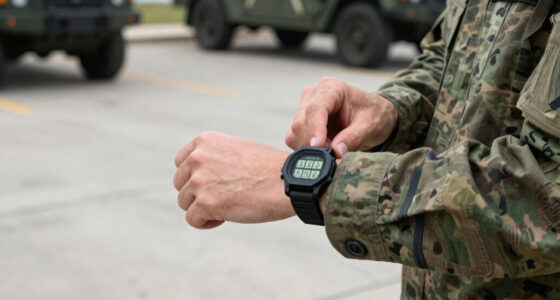
Even outdoor adventurers and travelers benefit—think about setting your watch or reading a train schedule in a foreign country. The precision saves lives and time, ensuring that plans are executed accurately regardless of language or location barriers. Understanding the importance of military time in these scenarios underscores its role in safety, efficiency, and effective communication across various fields.
As an affiliate, we earn on qualifying purchases.
Quick Tips to Master Military Time Conversion
- Practice with familiar times—like your daily wake-up or lunch—to build intuitive understanding. Repetition helps internalize the rules, making conversions automatic and reducing errors in high-pressure situations.
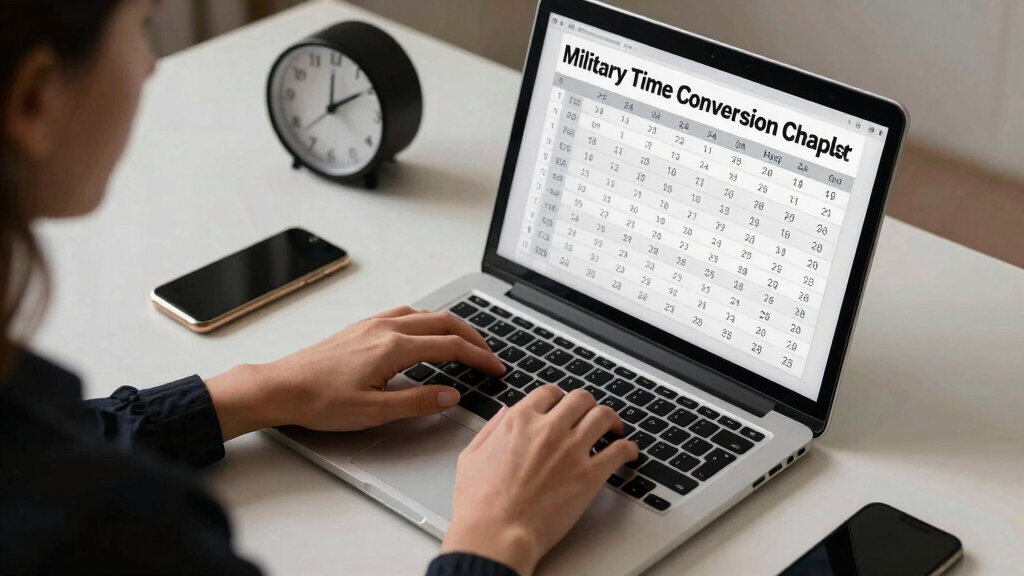
- Use a conversion chart until it becomes second nature. Visual aids reinforce learning by providing quick reference points, especially when dealing with unfamiliar times or in stressful scenarios.
- Set your digital clocks to 24-hour format to get used to reading it naturally. Consistent exposure helps your brain adapt, making it easier to interpret military times without hesitation.
- Download a quick calculator app for instant conversions, especially useful when you need to verify times on the spot. These tools serve as reliable backups, preventing mistakes during critical moments.
- Remember: add 12 for PM hours after noon, keep the same for AM, except for 12:00. Recognizing these simple rules helps you quickly transform any 12-hour time into military time with confidence, reducing the mental load during busy or stressful moments.
For example, if you see 1730 on a military schedule, just add 12 to 5 (17-12=5) — it’s 5:30 PM. Repeated practice with these tips will make conversions second nature, saving you time and reducing errors in critical situations. Understanding the reasoning behind these tips—why they work and how they prevent mistakes—strengthens your ability to rely on them in real-world scenarios, ensuring you stay accurate when it counts most.
Frequently Asked Questions
How do I convert 12-hour time to 24-hour time?
Start by identifying if the time is AM or PM. For AM times before 12, keep the same hour with a leading zero if needed. For PM times, add 12 to the hour (except 12 PM, which is 1200). Recognizing whether it’s AM or PM is key because it directly influences the conversion accuracy, especially around noon and midnight. Mistakes here can lead to significant scheduling errors or miscommunications, so always double-check whether the time is in the morning or afternoon.What is 2400 hours?
2400 hours is technically midnight at the end of the day, often written as 0000 hours. It marks the transition to the next day and is used in military schedules to indicate the very end of a 24-hour period. Understanding this helps prevent confusion with 0000, which also signifies midnight but at the start of the day. Properly distinguishing between these times ensures accurate logging, planning, and communication, especially in fields like aviation, military operations, and healthcare where timing precision is critical.How do I convert 3:15 PM to military time?
Add 12 to 3, making it 15. So, 3:15 PM becomes 1515 in military time. This conversion is straightforward, but understanding the reason behind it—adding 12 hours to afternoon times—helps reinforce the logic. Recognizing this pattern allows for quick mental conversions, which are essential in time-sensitive environments like hospitals, transportation, and emergency services where delays or misunderstandings can have serious consequences.Why is military time important?
It eliminates ambiguity, ensuring clear communication in urgent situations — from hospitals to airports — where seconds count. Accurate timekeeping reduces errors, prevents misunderstandings, and improves coordination across different teams and regions. This clarity is especially crucial in high-stakes environments such as military operations, aviation, and emergency response, where a single mistake in interpreting time can lead to costly or dangerous outcomes. The use of a standardized, unambiguous time format helps save lives and streamline operations.Are there easy tools or apps for quick conversion?
Yes, online charts, mobile apps, and digital clocks with automatic formatting make conversions fast and simple. These tools not only save time but also enhance accuracy, especially when dealing with unfamiliar or complex times. Using such tools regularly helps ingrain the conversion process into your routine, making military time second nature and reducing the risk of errors in critical situations. They serve as reliable backups that can prevent costly mistakes in high-pressure environments.Conclusion
Converting between 12-hour and 24-hour clocks isn’t magic — it’s just a handful of simple rules. Once you internalize them, you’ll read schedules, coordinate tasks, and communicate more clearly. It’s all about clarity when seconds matter most.
So next time you glance at a military schedule or digital clock, remember: a few numbers, a quick rule, and you’re set. That’s how precision saves lives — and makes your day easier.
Halloween Picks
halloween
As an affiliate, we earn on qualifying purchases.