
TL;DR

Get your wardrobe favorites delivered free with Prime
- Fast, free delivery on millions of items
- Prime Video, Amazon Music and more included
- Member-only deals all year
The DTG format combines date and time into a concise string, like 230815Z MAR 23, ensuring unambiguous communication. It uses UTC (Zulu time) to synchronize operations globally. Mastering it prevents costly mistakes in military and logistics settings.
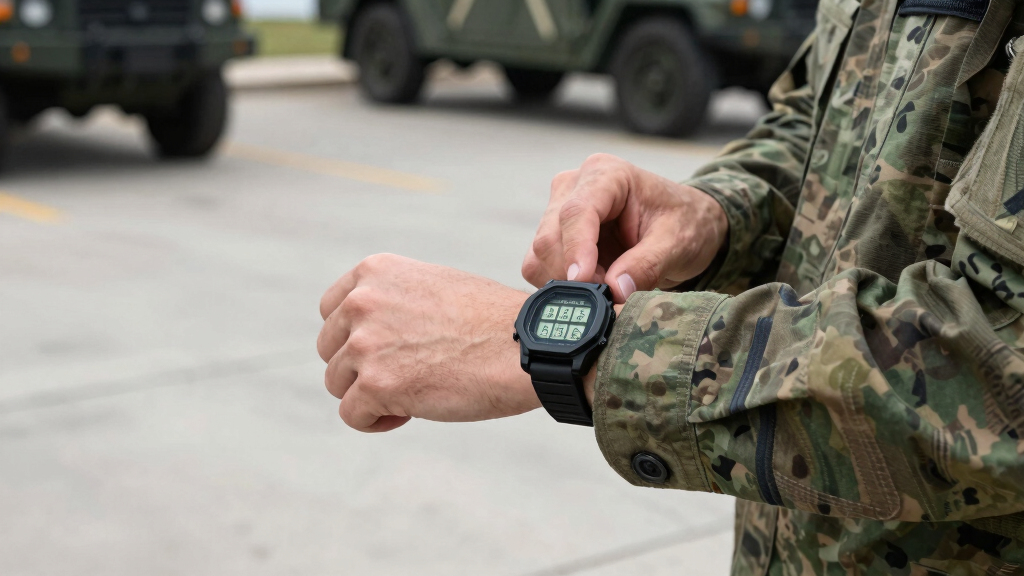
Imagine coordinating a rescue mission across three continents. A simple misunderstanding about the timing could cause delays or worse. That’s where the Military Date Time Group (DTG) comes into play. It’s a standard, concise way for armed forces to communicate dates and times clearly and unambiguously.
This guide breaks down the DTG format, showing you how it’s structured, why it matters, and how you can use it confidently—whether in military orders, logistics, or emergency planning. No fluff, just practical info for real-world clarity.
The DTG format combines date and time into a compact, unambiguous string, like 230815Z MAR 23.
Always include the ‘Z’ at the end to specify UTC (Zulu time) for global synchronization.
Converting civilian dates to DTG involves translating months, using 24-hour time, and maintaining a strict format.
The format minimizes errors across international units, especially during critical operations.
Practicing conversions and keeping reference guides helps in mastering DTG communication quickly.
Military Date Time Group Format Explained
The DTG format compresses date, time, month, year, and time zone into one precise operational timestamp. A string like 230815Z MAR 23 removes regional date confusion, anchors timing to UTC, and helps military, logistics, aviation, and emergency teams act from the same clock.
One timestamp. One global reference. Fewer costly misunderstandings.
How to read the DTG string
The format is compact by design: day, time, zone, month, and year are grouped so personnel can scan it quickly in orders, reports, logistics plans, and emergency coordination notes.
23
Day of the month written as two digits, from 01 to 31.
0815
Time in 24-hour format, avoiding AM and PM confusion.
Z
Zulu time means UTC, the shared global reference point.
MAR
Month is written as a clear uppercase abbreviation.
23
Year uses the final two digits for compact transmission.
Convert civilian time into DTG
Start with the local date and time, normalize the clock, convert to UTC when needed, then write the final group in strict military order.
Pick Date
Use the actual calendar day of the event after any UTC conversion.
Set Month
Convert the month to JAN, FEB, MAR, and so on.
Use 24H
Change 2:30 PM to 1430 before adjusting the zone.
Convert UTC
Subtract or add the local offset so all units share one time.
Add Z
Write the result with Z when the time is Zulu, such as 041230Z JUL 24.
DTG vs civilian date formats
Civilian formats vary by country. DTG avoids the April 7 versus July 4 problem by spelling the month, using 24-hour time, and making UTC explicit.
| Feature | Military DTG | Civilian Numeric Date | Operational Risk |
|---|---|---|---|
| Example | 230815Z MAR 23 | 03/23/23 or 23/03/23 | ✓ Low |
| Time Zone | Z indicates UTC | Often omitted or assumed local | ✗ High |
| Clock | 24-hour HHMM | May use AM/PM | ~ Medium |
| Month Clarity | MAR, JUN, AUG | Numbers change meaning by region | ✗ High |
| Best Use | Orders, reports, logistics | Local scheduling and casual records | ✓ Controlled |
What DTG reduces in the field
The practical value is not elegance. It is fewer coordination errors when people, aircraft, supplies, and rescue assets operate across jurisdictions and time zones.
Common mistakes to avoid
From order to synchronized action
DTG works because each concept links to the next: clear source time, shared zone, standardized string, matching interpretation, and coordinated execution.
Local Event
A meeting, patrol, launch, delivery, or rescue window is defined.
Zulu Sync
The time is converted to one universal reference.
Compact Code
The group is written as DDHHMMZ MMM YY.
Order Sent
Units receive the same unambiguous timestamp.
Local Convert
Each team translates UTC into its own operating clock.
Execute
Movement, communication, and support align globally.
Use the full DTG in official messages whenever timing matters.
Include Z when the timestamp is UTC, especially across regions.
Practice conversions until the pattern is fast under pressure.
What is the Basic Structure of the DTG?
The DTG is a compact string that combines date and time into one format. It follows the pattern: DDMMMYY HHMM(Z). For example, 230815Z MAR 23 means 15:00 UTC on March 23, 2023.
Breaking it down:
- DD: Day of the month (01–31)
- MMM: Three-letter month abbreviation (JAN, FEB, MAR, etc.)
- YY: Last two digits of the year
- HHMM: 24-hour time (00–23 hours, 00–59 minutes)
- Z: Optional, indicating Zulu time (UTC)
This structure keeps communication short and precise, reducing room for misinterpretation. Having a standardized format means that all personnel, regardless of their native language or local conventions, interpret the date and time identically. This uniformity is critical in high-stakes environments where misreading a date or time can lead to operational failures, such as missed targets, delayed responses, or logistical errors. The simplicity of the format also facilitates rapid communication, which is essential when decisions need to be made swiftly under pressure.
military date time group reference guide
As an affiliate, we earn on qualifying purchases.
As an affiliate, we earn on qualifying purchases.
Why the ‘Z’ at the End Matters and How Time Zones Are Handled
The letter ‘Z’ at the end signifies Zulu time, which is the same as Coordinated Universal Time (UTC). This standardization is vital because it provides a single reference point that all units, regardless of their geographic location, can rely on. Without it, each unit might interpret the same timestamp differently based on local time zones, leading to dangerous discrepancies.
For example, 051230Z JUN 24 means 12:30 UTC on June 5, 2024. If a unit in New York (UTC-4 or UTC-5 depending on daylight saving) sees this, they convert it to their local time to synchronize operations. This conversion process is not just a matter of convenience but a critical safety measure. It ensures that military actions, such as coordinated strikes or joint patrols, happen simultaneously and as planned. Omitting the ‘Z’ or misinterpreting it could result in units acting hours apart, potentially compromising missions or risking friendly fire incidents. The use of UTC as a universal standard reduces these risks and streamlines international cooperation.
As an affiliate, we earn on qualifying purchases.
How to Convert Civilian Dates and Times into DTG
- Start with the date: convert the month to its three-letter abbreviation (e.g., March becomes MAR).
- Write the day as two digits (01–31).
- Use the last two digits of the year.
- Convert your local time to 24-hour format. For example, 2:30 PM becomes 1430.
- Add the ‘Z’ if referring to UTC.
For example, if it’s 2:30 PM local time on July 4, 2024, and your local time is UTC+2, you’d convert to 1230Z (subtracting 2 hours from local time) and write: 040723Z JUL 24. This conversion is crucial because it ensures everyone is operating on the same temporal reference, avoiding confusion that can cause operational delays or errors. In high-pressure situations like emergency response or joint military operations, even a small mistake in time conversion can have serious consequences, such as missed coordination windows or misaligned attack timings. Therefore, understanding and accurately performing these conversions is essential for maintaining operational integrity and safety.
military time conversion reference book
As an affiliate, we earn on qualifying purchases.
As an affiliate, we earn on qualifying purchases.
Compare the DTG with Civilian Date Formats
| Feature | Military DTG |
|---|---|
| Format | DDMMMYY HHMM(Z) |
| Example | 230815Z MAR 23 |
| Time Zone | UTC (Zulu time), indicated by Z |
| Clarity | Unambiguous; no confusion with MM/DD/YYYY or DD/MM/YYYY |
Unlike civilian formats, which vary across regions and can lead to misinterpretation—such as confusing April 7 with July 4—the DTG provides a consistent, standardized way to record and communicate dates and times. This uniformity prevents costly mistakes in international operations, where misreading a date could lead to deploying resources on the wrong day or at the wrong time. The clarity of the DTG also reduces the cognitive load on personnel, allowing them to focus on mission-critical tasks rather than deciphering ambiguous date formats.
As an affiliate, we earn on qualifying purchases.
Real-World Example of DTG in Action
Imagine a multinational military exercise scheduled for 18:00 UTC on August 15, 2024. The order sent out reads: 151800Z AUG 24. Units across different continents interpret this without confusion—no matter if they’re in New York, London, or Tokyo. This consistency ensures synchronized actions, such as simultaneous troop movements or coordinated airstrikes, which are often critical for success.
Without the standard DTG, misreading the date or time could cause delays, missed communications, or even operational failures. For instance, if one unit interprets the time as local instead of UTC, they could arrive hours late or early, disrupting the entire operation. Embedding DTG in official orders, air traffic control, and logistical messages guarantees a shared understanding, reducing the risk of costly mistakes and enhancing mission effectiveness.
Common Mistakes to Avoid With DTG
One common error is mixing date formats—using MM/DD/YYYY instead of DDMMMYY. This can cause confusion, especially when different personnel are accustomed to different regional conventions. Another mistake is neglecting to specify the time zone, which can lead to units assuming local time rather than UTC, risking desynchronization.
For example, writing 051230 JUN 24 without the Z might be misinterpreted by someone in a different zone as a local time, causing them to act hours apart from the intended moment. Always including the Z ensures clarity and prevents these errors. Double-check your conversions, especially during daylight saving time shifts, when local times change but UTC remains constant. Recognizing and avoiding these common pitfalls is essential to maintaining operational accuracy and safety in high-stakes environments.
Quick Tips for Mastering DTG Communication
- Always convert local time to 24-hour UTC when in doubt, recognizing that this reduces errors caused by AM/PM confusion or regional time differences.
- Include the Z to specify Zulu time—don’t omit it, as its presence confirms the time is in UTC, which is critical for synchronization.
- Use the full format in official orders, reports, and messages to ensure clarity and prevent misinterpretation.
- Practice converting common dates/times to build confidence, especially under pressure, so that quick conversions become second nature.
- Keep a quick reference chart nearby for months and common conversions, which helps avoid mistakes during urgent or complex communications.
Frequently Asked Questions
Why does the military prefer UTC/Zulu time for DTG?
Using UTC/Zulu time ensures everyone across different zones is synchronized. It eliminates confusion, especially in international operations where local times vary widely.
Can civilians benefit from understanding DTG?
Absolutely. Emergency responders, logistics coordinators, and even event planners can use the clarity of DTG to prevent miscommunication and improve timing accuracy in complex situations.
What happens if I forget to include the ‘Z’ in the DTG?
Without the ‘Z’, the time might be assumed as local or interpreted differently—leading to potential errors. Always include it unless the context makes UTC explicit.
Are there any variations of the DTG used outside NATO?
Some countries or branches may have slight differences, but the core NATO standard remains the most widely accepted and recognized globally.
How do I handle daylight saving time when using DTG?
Convert your local time to UTC before formatting. Since DTG always uses UTC, daylight saving shifts are accounted for in your conversion, not in the format itself.
Conclusion
Mastering the Military Date Time Group format isn’t just about memorizing a string. It’s about adopting a clear, standardized way to speak a universal language of time. When every second counts—whether in a rescue, a raid, or a logistic chain—accuracy saves lives.
So next time you need to write or interpret a military order, remember: clarity doesn’t just matter. It’s everything.
Halloween Picks
halloween
As an affiliate, we earn on qualifying purchases.