
TL;DR

Get your wardrobe favorites delivered free with Prime
- Fast, free delivery on millions of items
- Prime Video, Amazon Music and more included
- Member-only deals all year
Harper’s Bazaar reports that alcohol-inspired perfumes are attracting attention as younger consumers show less interest in drinking and more interest in fragrance. Fragrance professionals describe the appeal as a mix of nostalgia, spirit-like scent notes and the ability to evoke a night out without drinking. The report does not provide sales data or evidence that the perfume trend is directly caused by declining alcohol use.
Alcohol-inspired perfumes are drawing interest from fragrance shoppers, according to a Harper’s Bazaar report featuring perfume sellers and industry professionals, even as the article describes alcohol consumption as being at a long-term low. The report points to a possible overlap between younger consumers’ reduced interest in drinking and greater spending on perfume, but it does not provide figures establishing a direct link or documenting record sales for the category.
The report focuses on fragrances built around impressions of spirits and nights out, rather than products containing drinkable alcohol. Common notes and accords discussed include whisky, cognac, rum-like warmth, plum, peach, spice, woods and vanilla. Perfume professionals say successful compositions balance those darker, rich impressions with fresher or lighter elements, so a scent does not feel one-dimensional.
Jorgelina Propato, head of evaluation for fine fragrance in North America at Givaudan, described the aim as recreating the atmosphere of enjoying a spirit while preserving contrast. She said boozy accords can be paired with fresh spices, woods, aromatics or fruit. Propato also observed that some consumers are moving beyond familiar sweet and fruity gourmand fragrances toward what she called more nuanced forms of indulgence.
The examples named in the report include Angels’ Share by Kilian, Thin Wild Mercury’s Whisky 1969, Art Brut’s Weltschmerz, Frapin’s Bonne Chauffe and Diptyque’s Eau Capitale. Jake Levy, co-owner of New York niche perfume shop Stele, recommended Whisky 1969 and Weltschmerz; Steve Gontarski, manager at Luckyscent, named Bonne Chauffe, Eau Capitale and Angels’ Share. The article calls Angels’ Share a bestseller based on sales units, but gives no sales totals, time period or comparison with other fragrances.
A Night-Out Mood Without the Drink
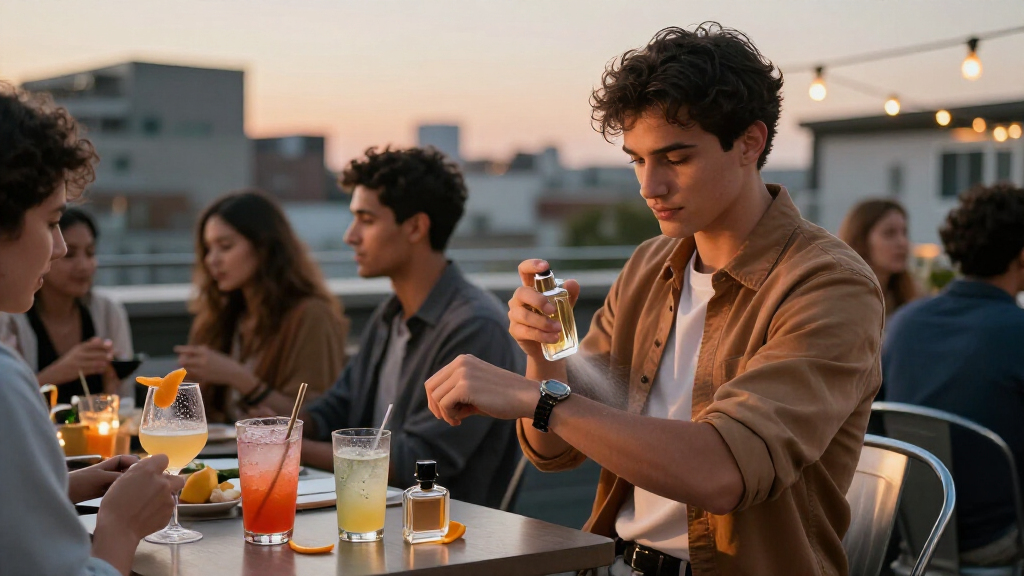
The trend matters to shoppers because fragrance can evoke drinking culture without requiring anyone to drink. That may appeal to people who enjoy the associations of a bar, a cocktail or a remembered occasion but prefer not to consume alcohol. It is not a universal preference: the report includes a retailer who has encountered customers who deliberately avoid boozy scents because they do not want reminders of drinking.
For fragrance brands, the examples suggest an opportunity to recast familiar spirit notes as a wearable luxury product. Perfume sellers and evaluators quoted in the article describe customers seeking more complex, atmospheric scents, rather than only sugary gourmand profiles. That is a qualitative account from people in the industry, not a measure of the market as a whole. The reporting also presents a possible cultural connection between lower drinking and perfume interest, but does not show that one trend is driving the other.
The distinction is useful for consumers: the same notes can carry different meanings for different people. A whisky or cognac accord may suggest warmth and nostalgia to one shopper and an unwanted reminder to another. The category’s appeal is therefore personal, not evidence that consumers are replacing alcohol consumption with perfume.
Popular right now

LG S90TR 7.1.3‑Channel OLED Evo TV Matching Home Theater Soundbar (Black)

Apple AirPods Pro 3 Wireless Earbuds with Active Noise Cancellation

De'Longhi Classic Signature Espresso Machine with Adjustable Milk Frother
As an affiliate, we earn on qualifying purchases.
From Spirit Notes to Fragrance
The Harper’s Bazaar report places the trend alongside two broader observations: it says alcohol consumption is at its lowest level in 94 years, citing Gallup, and describes younger generations as less likely to drink and more likely to spend on perfume. The source does not identify the specific Gallup survey, provide the underlying figures or spell out the time period and measure behind that comparison. Those points should be read as the article’s framing, not as a complete account of alcohol or fragrance markets.
Boozy perfume is a descriptive category, not a single formula. The fragrances named in the story use combinations of notes to suggest a drink, a setting or an after-hours mood. Levy describes Whisky 1969 as conjuring a person ending the day with whisky and a cigarette, while he characterizes Weltschmerz as a moody composition involving peach, cinnamon, whisky, rose, vanilla and cedar. Gontarski describes Bonne Chauffe through its balance of cognac and plum.
Angels’ Share provides a direct link to spirits through its name and concept. The article explains that the “angels’ share” refers to the small amount of alcohol that evaporates as liquor ages. It also notes that Kilian Hennessy, founder of the Kilian fragrance line, is an heir to the Hennessy cognac business. This is brand and product context, not evidence that the entire category is growing at a measured rate.
“You’d think New Yorkers would be over the bar scent, with all our nights out, and still we want more. My thought is that we want the booze without the hangover.”
— Jake Levy, co-owner of Stele
The Trend’s Scale Is Unclear
The article does not supply sales figures to support its description of boozy perfume releases selling in record numbers, nor does it give the baseline, products covered or time window for that claim. Its description of Angels’ Share as a runaway bestseller is based on sales units, but no unit count or comparison is included.
The cited alcohol-consumption claim also lacks the underlying Gallup data in the supplied report. It is not clear which population, survey measure or years are being compared. The story does not establish that people who drink less are buying more perfume, or that fragrance purchases are replacing alcohol purchases. The views quoted come from one evaluator and two retail professionals, alongside the article’s own product recommendations; they do not establish how common the preference is across the market.
More Data Would Test the Link
The report does not identify a forthcoming study, company announcement or scheduled industry milestone. The next evidence needed to assess the broader claim would include sales figures for alcohol-inspired fragrances across a defined period, comparisons with the wider fragrance market, and clearly specified alcohol-use data for the same populations and years.
Until such figures are available, readers can treat the story as a report on a visible fragrance theme and the opinions of people who sell and develop perfumes—not as proof that declining drinking is causing a boom in boozy scents. The products and customer responses described may continue to draw interest, but the trend’s size and its connection to drinking habits remain unquantified.
Key Questions
What does “boozy perfume” mean?
It describes a fragrance designed to suggest a spirit, cocktail or drinking setting through its scent. The report names notes such as whisky, cognac, plum, spice, woods and vanilla; it is not describing a drink or recommending alcohol consumption.
Does the report prove that lower drinking is driving perfume sales?
No. Harper’s Bazaar presents the two trends together and quotes fragrance professionals on possible appeal, but provides no data showing that declining alcohol use causes higher perfume sales.
Which perfumes does the article mention?
The report names Angels’ Share by Kilian, Thin Wild Mercury’s Whisky 1969, Art Brut’s Weltschmerz, Frapin’s Bonne Chauffe and Diptyque’s Eau Capitale, among other recommendations.
Do all shoppers like alcohol-inspired scents?
No. Luckyscent manager Steve Gontarski says he has met people who enjoy these scents and people who avoid them because they do not want reminders of drinking. Preferences vary, and the report does not quantify either group.
Source: harpersbazaar.com