
TL;DR

Get your wardrobe favorites delivered free with Prime
- Fast, free delivery on millions of items
- Prime Video, Amazon Music and more included
- Member-only deals all year
ISO dive watch certification verifies that a watch meets strict standards for water resistance, durability, and safety. It involves rigorous testing, often taking months, to ensure performance under extreme conditions. Many professional and recreational divers prefer ISO-certified watches for peace of mind.
Imagine plunging into the dark depths, your watch ticking reliably as you navigate the invisible world beneath the waves. That’s no accident. It’s because some dive watches earn a badge of trust — ISO certification. This isn’t just a marketing gimmick; it’s a rigorous guarantee that your watch can handle the pressure, corrosion, and impact of real dives. Whether you’re a professional diver or a serious enthusiast, knowing what goes into this certification helps you pick gear that won’t fail when it matters most.
In this guide, you’ll learn exactly what it takes for a watch to qualify for ISO certification. We’ll break down the standards, the testing process, recent innovations, and what it really means for your gear. Because when you’re underwater, every second counts, and your watch needs to perform flawlessly.
ISO 6425 certification involves extensive independent testing, including pressure, visibility, and impact resistance.
The process can take several months, reflecting the thoroughness of the standards.
Modern dive watches incorporate advanced materials like ceramic and titanium to meet evolving standards.
Certification isn’t mandatory but signals a serious commitment to safety and durability.
Always verify official certification documents or reports before trusting a watch in demanding environments.
What ISO 6425 Actually Demands from a Dive Watch
ISO 6425 is the gold standard for dive watches. It sets strict benchmarks covering everything from water resistance to shock tolerance. To earn the badge, a watch must endure a series of demanding tests that simulate real diving conditions. For example, it must resist at least 100 meters of water pressure, but professional models often go to 200 meters or more. That’s like withstanding a column of water over 650 feet high — enough to keep functioning deep in the ocean.
Beyond water, the standard insists on visibility in total darkness, unidirectional bezels to prevent accidental dive time extension, and resistance to magnetic fields and shocks. These criteria aren’t just buzzwords; they’re proven safeguards that ensure reliability when you’re deep underwater or facing extreme environments.
Understanding why each of these requirements matters helps you appreciate the tradeoffs involved. For instance, higher water resistance often means a thicker case, which might impact comfort or weight. Visibility in darkness requires luminous materials that can degrade over time, so choosing a watch with quality luminescence is essential for long-term performance. Resistance to magnetic fields and shocks ensures your watch keeps accurate time despite external influences, which is critical during technical dives or in environments with lots of electronic interference. Each standard is designed to mitigate specific risks, and together, they provide comprehensive protection for divers relying on their gear in life-critical situations.
Popular right now

Vitamix Propel Series 510 Professional-Grade Blender, 3 Programs, Black

LG 85-inch QNED75B Mini LED Smart TV Bundle with HDMI and CPS Protection Plan

Ninja Foodi 10-Qt DualZone Smart XL Air Fryer, 6-in-1, DZ550
As an affiliate, we earn on qualifying purchases.
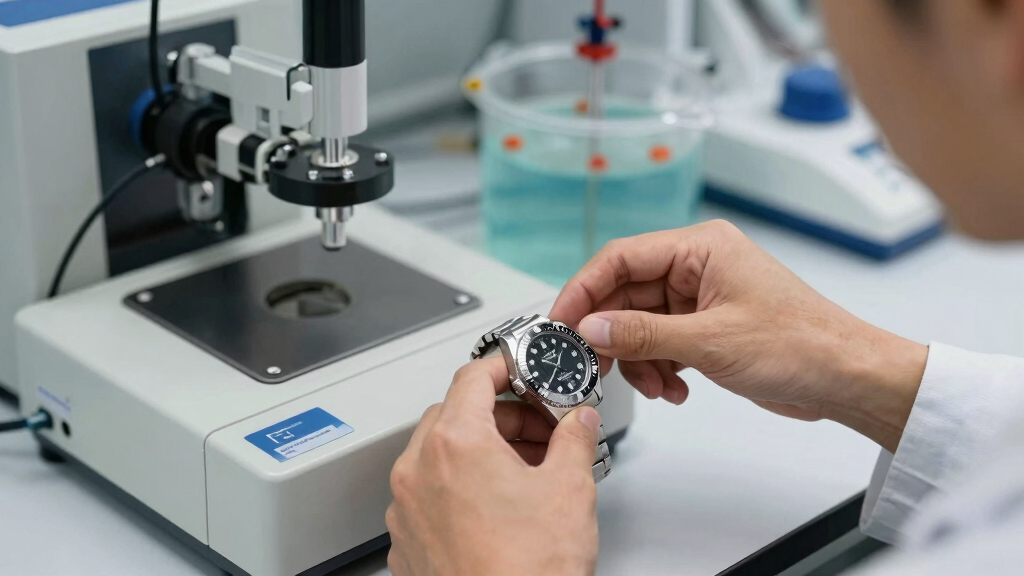
How a Dive Watch Gets Tested — The Step-by-Step Process
- Initial Inspection: The watch is examined for build quality, materials, and compliance documentation. This step ensures the watch’s design and manufacturing meet the baseline standards before rigorous testing begins, preventing subpar models from proceeding and saving time and resources.
- Water Resistance Test: The watch is submerged in a pressure chamber, pushing it to at least 125% of its rated depth. For example, a 200-meter rated watch faces 250 meters of simulated pressure. This test goes beyond simple water resistance ratings, revealing the watch’s true ability to withstand pressure spikes and dynamic water forces during actual dives, which can involve rapid movements and pressure changes.
- Visibility Test: Under complete darkness, the luminescent markers are checked to ensure they glow brightly for at least 25% of a 12-hour dive. This is crucial because a diver relies on clear visibility for navigation and safety in low-light conditions. The tradeoff here is that brighter luminescence can sometimes degrade faster, so the quality of luminous material and its application are critical to long-term reliability.
- Magnetic Resistance: The watch is exposed to magnetic fields up to 4,800 A/m, testing if it maintains accurate time. Magnetic fields are common in many environments, from electronic equipment to natural geomagnetic variations. A watch that can’t resist magnetism may become inaccurate, risking miscalculations during critical phases of a dive or in everyday use.
- Shock and Impact Testing: The watch endures drops and impacts to verify it keeps accurate time afterwards. This simulates accidental knocks or impacts that might occur during handling or in active environments, ensuring the watch remains dependable even after minor mishaps.
- Environmental Tests: It faces temperature extremes, saltwater immersion, and corrosion conditions, mimicking real diving environments. These tests reveal how well the watch withstands the harsh conditions of salt, heat, and cold, which can accelerate wear and tear. A watch that performs well here prolongs its lifespan and maintains performance, but it often involves tradeoffs in material choices and manufacturing complexity.
Recent Advances That Push Dive Watch Standards Forward
ISO standards aren’t static. Recent updates focus on deeper dives and saturation diving, where helium buildup becomes an issue. Modern dive watches now often include helium escape valves, allowing gases to vent safely during decompression. These features are vital for deep-sea professionals working in pressurized environments for days at a time, preventing the watch from suffering from helium-induced damage or crystal blowout during ascent.
Materials have also evolved. Ceramic bezels resist scratches and corrosion better than traditional metal, while titanium cases reduce weight without sacrificing strength. These materials not only enhance durability but also improve comfort for extended wear. Some brands are incorporating anti-magnetic coatings and eco-friendly manufacturing processes, aligning with sustainability trends, which also addresses the increasing demand for environmentally responsible products.
And while traditional standards focus on mechanical watches, the rise of smart and hybrid dive watches is prompting new discussions about safety certifications for digital features — a sign that standards will continue to evolve alongside technology. This ongoing evolution reflects the industry’s commitment to safety and innovation, but also introduces new challenges in balancing advanced features with proven reliability.
What You Need to Know About Certification and Your Purchase
Certification is voluntary but highly respected. Reputable brands seek ISO 6425 to back their claims, often providing independent test reports. If you’re shopping, look for official documentation or statements on the brand’s website. Certifications don’t just boost confidence — they’re a sign your watch has undergone rigorous testing, which can significantly reduce the risk of gear failure during critical moments.
Most certified watches take months to produce due to the intensive testing process. It’s not just a marketing move; it’s a real guarantee of performance. And remember: many dive watches are water-resistant without official certification, but the ISO badge adds an extra layer of trust, especially for professional use where safety margins are essential. Choosing a certified model means investing in peace of mind, knowing your watch has been scrutinized thoroughly and proven to meet demanding standards.
Your Top Questions About ISO Dive Watch Certification Answered
- What’s the difference between ISO certification and other standards like CE? ISO 6425 specifically tests dive watch performance, focusing on water resistance, visibility, and durability. In contrast, CE certification covers broader product safety and compliance standards across various product categories. Think of ISO as the specialized benchmark for diving gear, ensuring that watches are fit for the extreme demands of underwater environments.
- Can a watch be water-resistant without ISO certification? Yes, many watches are water-resistant based on manufacturer claims or basic testing, but they don’t meet the comprehensive criteria of ISO 6425. This means they might withstand splashes or shallow depths but could fail under more demanding conditions. Certification provides a higher level of assurance, especially important for deep or prolonged dives.
- Is ISO certification necessary for recreational diving? Not strictly necessary, but it offers significant peace of mind. For casual dives in calm waters, a water-resistant watch might suffice. However, if you venture into challenging conditions or deeper waters, an ISO-certified watch provides assurance that your gear has been rigorously tested for safety and reliability, reducing risks during critical moments.
- How do I verify if a watch is ISO certified? Look for official documentation or test reports from independent laboratories. Reputable brands often include this information on their websites or with the product packaging. Asking retailers directly can also help ensure you’re getting genuine certification, which is essential for verifying the watch’s compliance with safety standards.
- Are all high-end dive watches ISO certified? Many reputable brands like Rolex, Seiko, and Citizen pursue ISO certification for their professional-grade dive watches, but not all do. Some brands focus on other certifications or rely on their own testing standards. When choosing a high-end model, check for official ISO certification to ensure it meets the rigorous demands of professional diving or serious recreational use.
Conclusion
Choosing a dive watch that’s ISO certified isn’t just about bragging rights — it’s about safety, reliability, and peace of mind. When you’re miles beneath the surface, your gear needs to perform flawlessly, and that’s exactly what this certification guarantees. The next time you’re suited up for a serious dive, remember: a watch that’s been tested and certified isn’t just a tool — it’s an essential partner in the depths.
So, when shopping for your next dive watch, ask about ISO certification. It’s a small detail with huge implications. Because in the water, trust isn’t optional — it’s a matter of life and death.