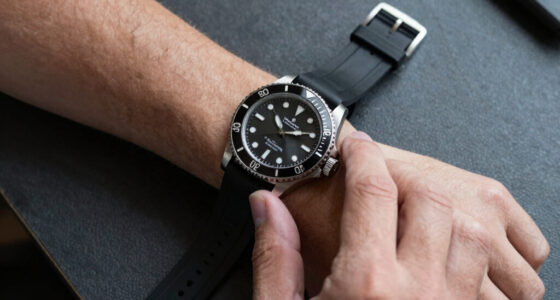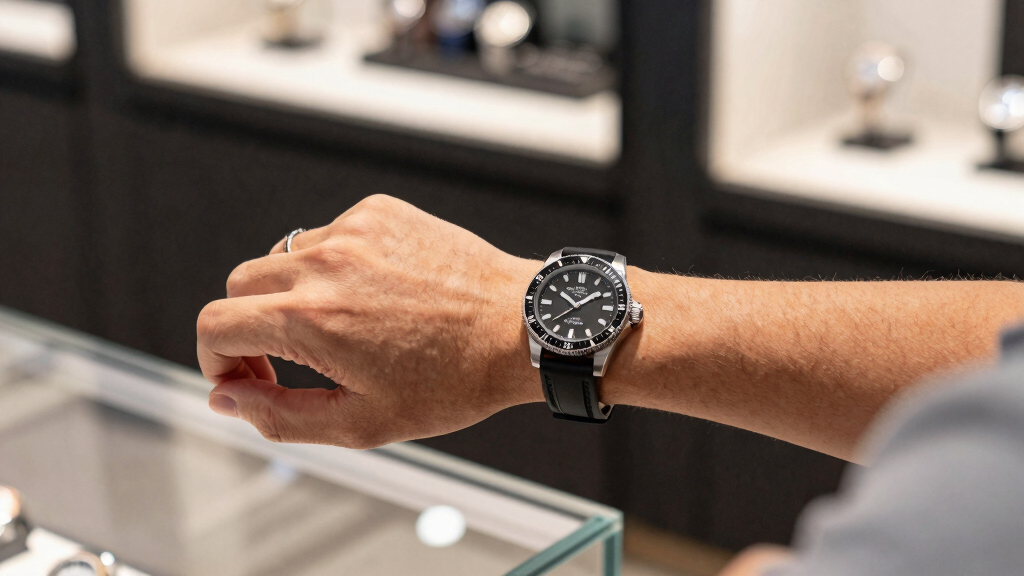

TL;DR
Dive bezels are unidirectional and measure elapsed time, making them safe for underwater use. Countdown bezels are bidirectional, set to track remaining time, ideal for topside activities. Choose based on your primary timing need and safety considerations.
Imagine you’re underwater, air running low, and your watch’s bezel is your lifeline. Now picture timing a sailing regatta or a parking meter on land — different tools, same purpose, but very different safety features. Choosing the right bezel isn’t just about looks or brand; it’s about understanding how each one works and what your activity demands.
In this guide, you’ll uncover the core differences between countdown and dive bezels. We’ll explain how each functions, their safety implications, and which is best for your adventures — whether deep-sea diving, racing, or just managing your daily tasks with precision.
A unidirectional bezel is a must-have for safe diving; it prevents accidental extension of your dive time.
Countdown bezels are more flexible for land use but lack the safety features necessary for underwater activities.
Choose your bezel based on primary activity: diving, racing, or everyday timing.
Material quality and lume improve visibility and durability, especially in low-light conditions.
Understanding scale direction and rotation rules helps prevent mistakes in critical moments.
Countdown Bezels vs Dive Bezels: Choosing the Right Tool
Imagine you’re underwater, air running low, and your watch’s bezel is your lifeline. Now picture timing a regatta start or a parking meter on land — different tools, same purpose, very different safety features. Choosing the right bezel isn’t about looks or brand; it’s about how each one works and what your activity demands.
“A true dive bezel must be unidirectional — rotating only counterclockwise, as mandated by ISO 6425 — so an accident can never extend your perceived dive time.”
Elapsed Time vs Remaining Time
The biggest distinction is what each bezel is designed to measure. Many owners conflate the two — don’t be one of them.
Dive Bezel
Turns only counterclockwise, so an accidental knock can shorten — never lengthen — your perceived dive time. Align the lumed zero triangle with the minute hand at descent; elapsed minutes read directly off the scale.
- Unidirectional rotation, mandated by ISO 6425
- First 15–20 minutes marked minute-by-minute for no-decompression limits
- Scale runs 0 → 60 in standard order
- Built for saltwater, shock & magnetism resistance
Countdown Bezel
Usually bidirectional, with the scale printed in reverse order (60 down to 0). Set the marker at your target; as the minute hand advances, remaining minutes read directly off the bezel — a stopwatch for land use.
- Bidirectional (mostly) for quick, flexible setting
- Scale runs 60 → 0 in reverse order
- Ideal for regattas, cooking, parking meters, meetings
- Not covered by ISO 6425 — no standardized safety requirements
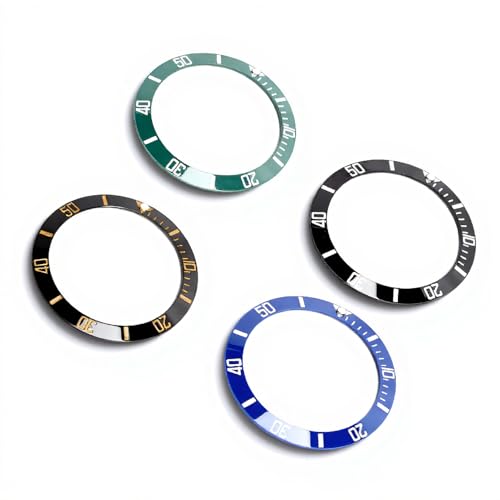
BONKZEBU Unidirectional Rotating Ceramic Bezel Insert Replacement for Diver Watches Scratch Watch Accessories Bezel Ring
【Matériaux de Haute Qualité】Fabriqué en céramique de et de haute dureté, cet insert de lunette de montre est…
As an affiliate, we earn on qualifying purchases.
As an affiliate, we earn on qualifying purchases.
Why One-Way Rotation Is a Lifeline
A bump in a dark, salty environment is not a hypothetical. What happens next depends entirely on which way your bezel can turn.
Dive Bezel · Unidirectional
If the bezel is struck, it can only rotate counterclockwise — shortening your indicated elapsed time. You surface earlier than needed, never later.
Countdown Bezel · Bidirectional
Spun the wrong way underwater, it can falsely extend your remaining time — meaning you could run out of air sooner than you think. Fine topside; unacceptable below.
The ISO 6425 Mandate
The international standard for true dive watches explicitly requires unidirectional rotation, legibility at 25 cm in total darkness, markings at least every 5 minutes, and resistance to saltwater, shock and magnetism. A countdown bezel meets none of these — never substitute one underwater.

Dink’r Magnetic Pickleball Timer – Interval Training Timer for Pickleball Drills, Large Display, Loud Alarm, Strong Magnet for Net Post & Fence – Pickleball Training Equipment
TRAIN WITH A PLAN Stop guessing your drills. Use count up or countdown to stay on track and…
As an affiliate, we earn on qualifying purchases.
As an affiliate, we earn on qualifying purchases.
How Each Bezel Works in the Real World
Set it before you start, then read the answer straight off the scale — no mental arithmetic at depth or mid-race.
Align the zero marker
At the start of your dive, rotate the lumed triangle to line up exactly with the minute hand.
Let time advance
As minutes pass, the hand moves ahead of the zero point along the bezel scale.
Read elapsed minutes
Hand pointing at “20” on the bezel? You’ve been underwater for 20 minutes. Done.
Set the target number
Counting down 10 minutes? Rotate the bezel so its “10” sits at the current minute hand.
Watch the gap close
The hand advances toward the bezel’s zero as your window shrinks.
Read remaining minutes
The numeral at the minute hand shows exactly how long is left until your event.

Bezel Insert Replacement for 40mm Invicta Watch 8926OB 1953 23678 26600 9937Ob Pro Diver Watch Ceramic (Black)
Compatible Brand: Invicta Pro Diver SS 9937OB, Invicta Diver 9937OB, 8926OB, 8926, 24760 40mm watches with sapphire crystal.
As an affiliate, we earn on qualifying purchases.
As an affiliate, we earn on qualifying purchases.
The Full Comparison
Every functional difference that matters, side by side. The highlighted column is the safety-certified tool.
| Feature | Dive Bezel | Countdown Bezel |
|---|---|---|
| Rotation | ✓ Unidirectional — counterclockwise only | ~ Usually bidirectional (some one-way) |
| Measures | Elapsed time — how long since X | Remaining time — how long until X |
| Scale Order | Standard, 0 → 60 | Reverse, 60 → 0 |
| Safe Underwater | ✓ Yes — fail-safe by design | ✗ No — knock can extend remaining time |
| Standard | ✓ ISO 6425 certified | ✗ No governing safety standard |
| Lume Priority | Critical — lumed zero pip + first 15 min scale | ~ Optional — mostly used topside |
| Best For | Diving, decompression stops, safety-critical timing | Regattas, cooking, parking, meetings, board games |

NIXON 51-30 Chrono A1389-300m Water Resistant Men's Analog Fashion Watch (51mm Watch Face, 25mm Stainless Steel Band)
Bold Design: The 51-30 Chrono stands out as the ultimate statement piece, defying the notion that watches should…
As an affiliate, we earn on qualifying purchases.
As an affiliate, we earn on qualifying purchases.
Which Bezel Fits Your Activity?
Editorial fit ratings based on each bezel’s design intent — the right answer changes with the job.
Other Bezels Worth Knowing
Not all bezels are created equal — these are often confused with countdown scales but serve very different missions.
Compressor-Style
Operated via a second crown, the scale sits under the crystal — protected from knocks, but slower to adjust with wet or gloved hands.
Programmable Countdown
Dedicated countdown subdials with programmable mechanical memory — a specialized racing instrument, not a simple rotating scale.
Speed & Time Zones
Measure speed over distance or track a second time zone. Useless for diving or countdowns — built for entirely different timing needs.
From Activity to Answer in Seconds
The Practical Checklist
Identify your primary activity
Diving demands unidirectional, ISO-compliant. Racing benefits from countdowns. Daily tasks? A simple countdown or GMT suffices.
Verify rotation direction
Confirm it before you rely on it — one-way counterclockwise for the water, two-way for the land. Double-check alignment at the start.
Prioritize visibility
Look for a lumed zero pip and scale — especially the first 15 minutes, the critical decompression zone. Lumed ceramic is now mid-range.
Choose durable materials
Ceramic inserts resist scratches and are standard even under $500; titanium and forged carbon add toughness for active use.
Feel the bezel action
120-click vs 60-click, grip machining and “no-play” tolerances separate refined tools from sloppy ones — test it in hand.
Know the digital alternative
Apple Watch Ultra and Garmin Descent handle dive timing with redundant safety — mechanical bezels answer with heritage and analog reliability.
What’s the core difference? Elapsed time vs. remaining time — here’s the simple truth
The biggest distinction is in how each bezel is designed to measure time. Dive bezels measure elapsed time: how long you’ve been underwater. They turn only one way — counterclockwise — to prevent accidental extension of your dive time, which could be dangerous.
Countdown bezels, on the other hand, measure remaining time: how much time is left until an event or deadline. They’re usually bidirectional, allowing you to set a target and see how much time remains at a glance. Think of them as a stopwatch for land use, like timing a race or a cooking session.
Practical takeaway: Use a dive bezel to track your dive duration or elapsed time during activities where safety is critical. Use a countdown bezel when you need to measure how much time you have left before an event, and ensure you set it correctly before starting.
Why does rotation direction matter? Safety first for divers, convenience for land timers
When it comes to rotation, the rule of thumb is simple: diving watches use unidirectional, counterclockwise-only bezels. This design prevents accidental knocks from extending your perceived dive time, which could be deadly. Imagine a bump in a dark, salty environment — the bezel can only turn back, never forward.
Countdown bezels, however, are often bidirectional. This makes them more flexible for land-based activities, like setting a timer for a meeting or a cooking window. If you accidentally spin it, it can go either way — but that’s fine because safety isn’t a life-or-death concern in those scenarios.
Practical tip: Always ensure your bezel rotation matches your activity. For diving, verify it’s unidirectional and correctly aligned before your descent. For land activities, a bidirectional bezel allows quick adjustments, but double-check the remaining time to avoid mistakes.
How each bezel measures time: The setup and readout in real-world terms
Setting a dive bezel is straightforward: align the zero marker (usually lumed triangle) with the minute hand at the start of your dive. As time passes, you read how many minutes have gone by directly from the bezel scale. For example, if the minute hand is now pointing at 20 on the bezel, you’ve been underwater for 20 minutes.
Countdown bezels are set differently. You rotate the bezel so that the scale’s number matches your target time. For instance, if you want to count down 10 minutes, you set the bezel’s “10” at the current minute hand position. As time passes, you check how far the minute hand has moved from that mark — the remaining minutes are read directly off the bezel.
Practical step: Before starting your activity, set the bezel according to your goal—align zero for elapsed time or set your target for countdown. During use, glance at the bezel to quickly assess your remaining or elapsed time without complex calculations.
Safety implications: Why a countdown bezel isn’t a substitute for a dive bezel
Here’s the reality: a countdown bezel isn’t designed for safety underwater. Its bidirectional nature means it can be accidentally moved, giving a false sense of remaining time. If you’re diving, that could mean running out of air sooner than you think.
ISO 6425, the standard for dive watches, explicitly requires unidirectional rotation. This safety feature guards against accidental extension of dive time, which could be fatal. Practical step: Always verify your bezel is unidirectional and correctly aligned before your dive. Do not rely on a countdown bezel for safety-critical underwater timing.
On land, however, a bidirectional bezel is fine. It’s like a kitchen timer or a parking meter — quick adjustments don’t threaten lives. Just don’t rely on it underwater.
Legibility and lume: What to look for in a good bezel
When timing matters, visibility in low light is key. Dive bezels excel here — they feature large, lumed zero markers, often with a triangle or pip that glows brightly in darkness. The scale itself is usually lumed, too, especially on the first 15 minutes, because that’s the critical zone for decompression stops.
Countdown bezels generally don’t need to be lumed since they’re used topside. But some high-end models do feature luminous scales for nighttime or dim conditions, offering a quick glance at remaining time even in poor lighting.
Practical advice: Prioritize a bezel with clear, lumed markers if you often dive or operate in low-light conditions. For land use, focus on readability and luminous features if you plan to use the bezel at night or in dim environments.
Other types of bezels and their roles: Internal, regatta, tachymeter
Not all bezels are created equal. Internal rotating bezels, operated via a crown, are common in vintage-style dive watches like the Longines Legend Diver. They’re protected from knocks but require a bit more effort to adjust.
Regatta timers, like Rolex Yacht-Master II, feature dedicated countdown scales and programmable features for sailing races. These are specialized tools, often with digital or mechanical controls, designed specifically for competitive sailing.
Then there are tachymeters or GMT bezels — used for measuring speed over distance or tracking multiple time zones. They’re not suited for diving or countdowns but serve different timing needs on land or in aviation.
Practical insight: Match your activity to the bezel type. For example, if you race sailboats regularly, a regatta timer is tailored for your needs. For frequent travel, a GMT bezel can help track multiple time zones efficiently.
Practical tips for choosing your bezel: What to consider before you buy
- Identify your primary activity: Diving requires unidirectional, ISO-compliant bezels. Racing or sailing benefits from programmable countdowns. Daily tasks? A simple countdown or GMT bezel suffices.
- Ensure correct rotation: Confirm the bezel’s rotation direction—unidirectional for diving, bidirectional for land use—to prevent mistakes.
- Prioritize visibility: Look for lumed markers and clear scales to read your timing accurately, especially in low-light conditions.
- Choose durable materials: Ceramic inserts resist scratches; titanium or forged carbon add toughness for active lifestyles.
- Consider your preference: Decide between a smooth or tactile bezel, and whether you prefer a 60-click or 120-click mechanism for precision. Practical step: Make a checklist aligned with your activity needs, and test the bezel’s feel in-store or via detailed specs.
Matching your activity with the right bezel features ensures you get reliable, safe, and easy timing whenever you need it.
Comparison table: Dive bezels vs. countdown bezels — what’s the best fit?
| Feature | Dive Bezels | Countdown Bezels |
|---|---|---|
| Rotation | Unidirectional (counterclockwise only) | Bidirectional (can turn both ways) |
| Measurement | Elapsed time since start | Remaining time until event |
| Standard | ISO 6425 compliant | No standard, varies by use |
| Best use case | Scuba diving, underwater safety | Land activities, racing, cooking |
| Lume | Yes, usually on zero marker and scale | Varies; often no lume needed |
| Safety | High — prevents accidental extension of dive time | Lower — designed for convenience, not safety |
Frequently Asked Questions
Can I use a countdown bezel for diving?
It’s not recommended. Countdown bezels are bidirectional and lack the safety features required for diving. Using a unidirectional dive bezel ensures you don’t accidentally overestimate your remaining air supply.Why do dive bezels only turn one way?
To prevent accidental extension of your dive time — a safety feature mandated by ISO 6425. It protects divers from mistakenly thinking they have more air than they actually do if the bezel is bumped.How do I quickly set a countdown bezel for an event?
Rotate the bezel so that the target time aligns with the minute hand. As the minute hand advances, you read the remaining minutes directly off the bezel. It’s a simple, intuitive process.Are internal rotating bezels safer than external ones?
Internal bezels are protected from knocks and accidental movement, making them safer for rough conditions. However, they require a crown to operate, which can be less convenient for quick adjustments.Conclusion
If your world revolves around the water, a dive bezel with unidirectional rotation is your best friend. It’s a simple safety barrier that protects you from critical errors underwater. But on land, a countdown or GMT bezel offers quick, flexible timing — just don’t expect it to keep you safe in the depths.
Pick the right tool for your needs, respect its limits, and your watch becomes an even more reliable partner in every adventure. Timing is everything — make sure you have the right gear to keep you on track.